
Pregnancy, childbirth, and breastfeeding leave physical changes that may not fully respond to diet and exercise alone. Stretched abdominal muscles, deflated or sagging breasts, and stubborn fat pockets are common. For many mothers, this is about feeling at home in their bodies again after a season that reshaped them.
A mommy makeover answers that through a tailored set of surgical procedures. This guide covers what it includes, who it suits, what recovery looks like, and the realistic risks and costs to weigh.
What is a Mommy Makeover?
A mommy makeover is a customized combination of body contouring procedures designed to restore a more contoured shape closer to the pre-pregnancy shape. It is not a fixed package that every patient receives. One mother may need abdominal repair plus a breast lift. Another may benefit more from liposuction paired with a breast augmentation. If only one area concerns you, a single procedure may be the right path instead of a combination.
Two ideas separate a mommy makeover from any single cosmetic procedure. First, every component targets a change in pregnancy created in the breasts, midsection, or surrounding contours. Second, the surgeon performs the chosen procedures in a single surgical session, which the benefits section below explains in detail.
Who a Mommy Makeover Is For
A mommy makeover suits mothers who have completed their family, are no longer actively losing weight, and want to address pregnancy-related changes that have not improved with time, training, or nutrition. Eligibility comes down to medical readiness, lifestyle readiness, and any special considerations from your pregnancy history.
Medical Candidacy
Surgeons evaluate the following before clearing you for combined surgery:
- Stable weight at or near your goal, steady for six months or longer
- BMI within a surgically appropriate range, evaluated by your surgeon based on procedure type and overall health
- General health with no active conditions affecting healing or anesthesia safety
- Non-smoker status, or willing to stop smoking at least four weeks before and after surgery
- Pre-op clearance, including blood work, medical history review, and an EKG when age or health indicates
Lifestyle Readiness
Beyond the medical workup, your daily life affects when this becomes the right moment:
- Finished breastfeeding for at least six months, since earlier surgery risks results disrupted by hormonal changes, and continued tissue remodeling
- Not planning future pregnancies, which can re-stretch the abdominal repair and re-deflate the breast results
- Able to dedicate two weeks to focused recovery
- Reliable childcare support during the first 14 days
Special Considerations
If you had a prior C-section, your surgeon can often incorporate the existing scar into the incision of your tummy tuck revision so you do not end up with two horizontal scars. Your surgeon can sometimes repair pregnancy-related abdominal wall hernias during the same surgery.
Emotional readiness counts too. Wanting to feel more like yourself again is a valid reason to consider surgery, and a good consultation gives you space to talk through that.
What Procedures Are Included in a Mommy Makeover?
A mommy makeover usually combines procedures from two categories: breast and abdominal. Liposuction often joins as an adjunct procedure, with optional contouring add-ons rounding out the plan.
Breast Procedures
Pregnancy and nursing change breast volume, shape, and position. Three breast options address these patterns:
- Breast augmentation restores the fullness lost after nursing using saline, silicone, or cohesive-gel implants. The right option when volume is the main concern.
- Breast lift repositions sagging tissue, removes excess skin, and reshapes the breast without changing its size. The right option when breasts feel emptier and have dropped lower.
- Breast reduction removes excess tissue and fat in mothers whose breasts grew during pregnancy and have remained larger.
Lift and augmentation often pair to provide patients with both elevation and added volume. Tummy tuck with breast lift ranks among the most-requested mommy makeover combinations.
Abdominal Procedures
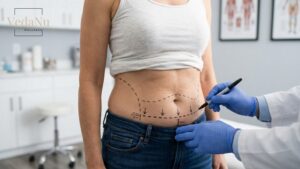
The abdomen takes the most direct impact during pregnancy. Skin stretches past its elastic recovery point, and abdominal muscles can separate down the midline, a condition called diastasis recti. Severe diastasis recti can contribute to pelvic floor dysfunction and lower-back pain, both of which often improve after surgical muscle wall repair. Two procedures handle these changes:
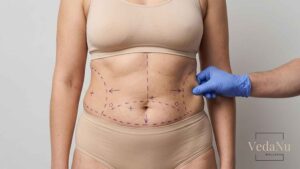
- Tummy tuck (abdominoplasty) removes excess skin from the lower abdomen through a low horizontal incision hidden beneath underwear, repairs separated abdominal muscles with internal sutures, and re-drapes the remaining skin. Your surgeon then repositions the navel to match the new contour.
- A mini tummy tuck addresses isolated lower-abdominal laxity below the navel when the muscle tone above the navel remains intact.
- An extended tummy tuck goes beyond the standard abdominoplasty by addressing excess skin and laxity that extends around the flanks and lower back. It
Liposuction and Body Contouring
Liposuction plays an adjunct role in most mommy makeovers, pairing with a tummy tuck to remove fat that the abdominoplasty does not directly address, including the flanks, hips, and upper abdomen. Beyond that adjunct role, liposuction is optional for sculpting additional areas, such as the back, arms, or thighs.
A Brazilian Butt Lift (BBL) uses fat harvested during liposuction and injects it into the buttocks to add shape and projection. The procedure slims donor areas like the abdomen or flanks; at the same time, the buttocks fill out, with no implants required.
Some mothers pursue procedures like labiaplasty or vaginoplasty separately for post-childbirth concerns, and your surgeon can advise on combining them with a mommy makeover during consultation.
Read More: Liposuction Areas: Where Can Fat Be Removed?
How Surgeons Customize the Plan
Your consultation builds the plan around several factors:
- Your specific concerns. Some mothers lose breast volume but keep firm abdominal tone. Others have the opposite pattern.
- Skin elasticity. Less-stretched skin may respond well to liposuction alone. Skin that has lost elasticity usually requires a procedure that removes skin, such as a tummy tuck or breast lift.
- Muscle separation severity. Mild diastasis recti often responds to physical therapy. Moderate to severe separation needs surgical repair.
- Health and surgical safety. Your surgeon evaluates your BMI, blood work, and any conditions that affect healing or anesthesia.
Why Surgeons Combine Procedures Into One Mommy Makeover Surgery
Modern surgical planning allows safe combinations for appropriate candidates in accredited facilities, replacing the older approach of staging procedures apart.
Benefits of Combination Surgery
- Fewer anesthesia exposures. Combining procedures reduces the number of anesthesia events, though the total surgical duration still requires careful management.
- One recovery window. You take time off once instead of multiple times. The early days are more intense than a single-procedure recovery, but the total number of weeks away from full activity is shorter than with staging surgeries separately.
- Better proportional planning. The surgeon can balance the silhouette as a whole rather than correcting one zone at a time.
- Lower combined facility fees, since several procedures share one operating-room block.
When Combination Surgery May Not Be Right
Surgeons may recommend staging across two sessions when:
- BMI is above the threshold considered safe for combined operating time
- Total surgery would run longer than six hours
- Health conditions limit anesthesia tolerance
- The patient prefers a shorter, easier first recovery
For some patients, two shorter surgeries are safer than one long one.
What the Surgical Day Looks Like
Your surgeon performs the procedures under general anesthesia in an accredited surgical center. Total operating time for a combined mommy makeover ranges from 2 to 6 hours, depending on the number of procedures included in your plan and the complexity of each. Some patients go home the same day for less complex combinations. Others stay overnight for observation, depending on procedure length and recovery needs.
Pre-op preparation typically includes blood work, smoking cessation, and avoiding blood-thinning medications and herbal supplements for two weeks before surgery, all under your surgeon’s guidance. Your care team places compression garments before you leave, which support healing, reduce swelling, and shape the new contour.
Mommy Makeover Recovery Timeline
Recovery is the stage many patients feel most uncertain about. Functional healing and aesthetic results follow different timelines.
Functional Recovery
- Days 1 to 7. Soreness, swelling, and fatigue are highest. Compression garments stay on. Walking short distances supports circulation. No lifting, bending, or reaching overhead.
- Weeks 2 to 3. Most patients return to desk work and light daily activity. You can drive once you stop taking prescription pain medication.
- Weeks 4 to 6. Light walking and gentle movement get clearance. Strenuous exercise and heavy lifting remain restricted.
- Weeks 6 to 8. Most patients return to full activity. Final clearance comes from your surgeon.
You wear compression garments full-time for 4 to 6 weeks, then taper to part-time wear based on swelling and surgeon guidance.
Results Timeline
The contour you see at six weeks is not the final contour. Residual swelling resolves over months, and abdominal swelling can take up to a year to fully settle. Final aesthetic results stabilize between three and twelve months post-surgery, with the most noticeable refinement happening between months three and six.
How Long Do Mommy Makeover Results Last?
Results are long-lasting when two conditions hold: stable weight and the abdominal wall is not subjected to the mechanical demands of another pregnancy. Tummy tuck, muscle repair, and excess skin removal provide long-term results, provided no future pregnancy or major weight gain re-stretches the tissue.
Breast lifts and reductions hold their shape, though breast tissue continues to age naturally over time. Modern implants are designed to last many years, and replacement is recommended when complications arise, imaging indicates a concern, or you want a size change.
Stable weight, balanced nutrition, regular movement, and good skin care help keep your results sharp for longer.
What a Mommy Makeover Can and Cannot Do?
A mommy makeover delivers meaningful improvement, not perfection. A clear-eyed view of what surgery can and cannot reach makes the result feel right when you see it.
What it can do:
- Improve abdominal contour by removing loose skin and repairing separated muscles
- Restore breast volume, shape, or position lost during pregnancy and nursing
- Reduce stubborn fat pockets that diet and exercise have not addressed
- Reshape the silhouette into a more proportional balance
What it cannot do:
- Stop the natural aging process. Skin and tissues continue to change over time.
- Fully replicate pre-pregnancy anatomy in every case. Improvement is the realistic goal.
- Replace unhealthy lifestyle habits. Surgery cannot maintain results without stable weight and good general care.
- Eliminate all signs of pregnancy. Some skin tone changes, stretch marks, or scar tissue may remain.
The right framing is body contouring after pregnancy, not body reset.
Mommy Makeover Risks and Safety
Every surgery carries risk, and combining procedures means each procedure’s risks add to the surgical plan. Here are the risks worth understanding:
- Bleeding and hematoma. Blood collecting under the skin, sometimes requiring drainage.
- Seroma. Fluid buildup at the surgical site often resolves with simple aspiration.
- Infection. Reduced through accredited facility standards, antibiotics, and post-op care.
- Anesthesia reactions. Pre-op screening identifies patients at higher risk.
- Scarring. All incisions leave permanent scars, placed where underwear and bras cover them. Scars fade significantly over the first year with proper care.
- Asymmetry. Some degree is normal.
- Changes in sensation. Temporary numbness or tingling is common and usually resolves over months.
- Capsular contracture (with implants). Scar tissue forms tightly around an implant, sometimes requiring breast revision.
- Delayed wound healing. More common in smokers, patients with diabetes, or those with high BMI.
A combined mommy makeover carries a risk profile that depends on the procedures, the patient’s health, and the duration of surgery. Patient selection, surgical technique, and post-op compliance reduce risk.
About Revision Surgery
A small percentage of patients return for revision. Common reasons include mild asymmetry visible after swelling resolves, variation in healing, scar refinement, or a change in preference for implant size. Most revisions are minor and happen six months to a year out, once final healing is complete.
A consultation helps clarify how these risks apply to your individual anatomy and goals. Bring your medical history and any specific questions for a case-specific picture.
Mommy Makeover Cost Factors
Mommy makeover cost varies widely based on the combination of procedures, anesthesia time, facility fees, and post-op care. The number depends on which procedures your plan includes. A tailored quote comes after consultation.
The factors that move the price the most:
- Number and complexity of procedures. A tummy tuck plus breast augmentation costs less than a tummy tuck plus breast lift plus liposuction plus BBL.
- Operating time. Longer surgeries mean higher anesthesia and facility fees.
- Surgeon experience. Surgeons with extensive combination-surgery experience typically charge more, and the safety and aesthetic margin justifies the difference.
- Geographic location. Major metro practices price differently from smaller markets.
- Implants or grafts. Materials and processing add to the total.
- Post-op care needs. Compression garments, lymphatic massage (a gentle massage technique that promotes fluid drainage and reduces post-surgical swelling), and follow-ups may come bundled or billed separately.
Most practices offer financing for multi-procedure plans.
Non-Surgical Alternatives Worth Knowing About
Some mothers explore non-surgical options before committing to surgery. The following treatments typically offered by plastic surgery clinics cannot repair separated abdominal muscles or remove significant excess skin, but for mild changes, they may be enough on their own:
- Skin tightening treatments like radiofrequency or ultrasound-based devices for mild laxity
- Non-surgical fat reduction, like cryolipolysis, a non-surgical treatment that freezes and destroys fat cells for small, isolated fat pockets
- Pelvic floor physical therapy for postpartum core, bladder, and pelvic concerns
- Targeted strength training and physical therapy for mild diastasis recti
A consultation at a plastic surgery clinic walks through both surgical and non-surgical options, and your surgeon will tell you when a less invasive path serves you better.
Restoring Your Post-Pregnancy Figure at VedaNu Wellness
Every mother’s body tells a different story. The right plan for postpartum plastic surgery depends on what pregnancy changed in your body and what you want to restore.
If you are in San Diego or the surrounding area and ready to talk through post-pregnancy body contouring, the team at VedaNu Wellness is here to help. Contact VedaNu Wellness to discuss your goals with our board-certified plastic surgeon, Dr. James Chao, and build a plan that fits you.