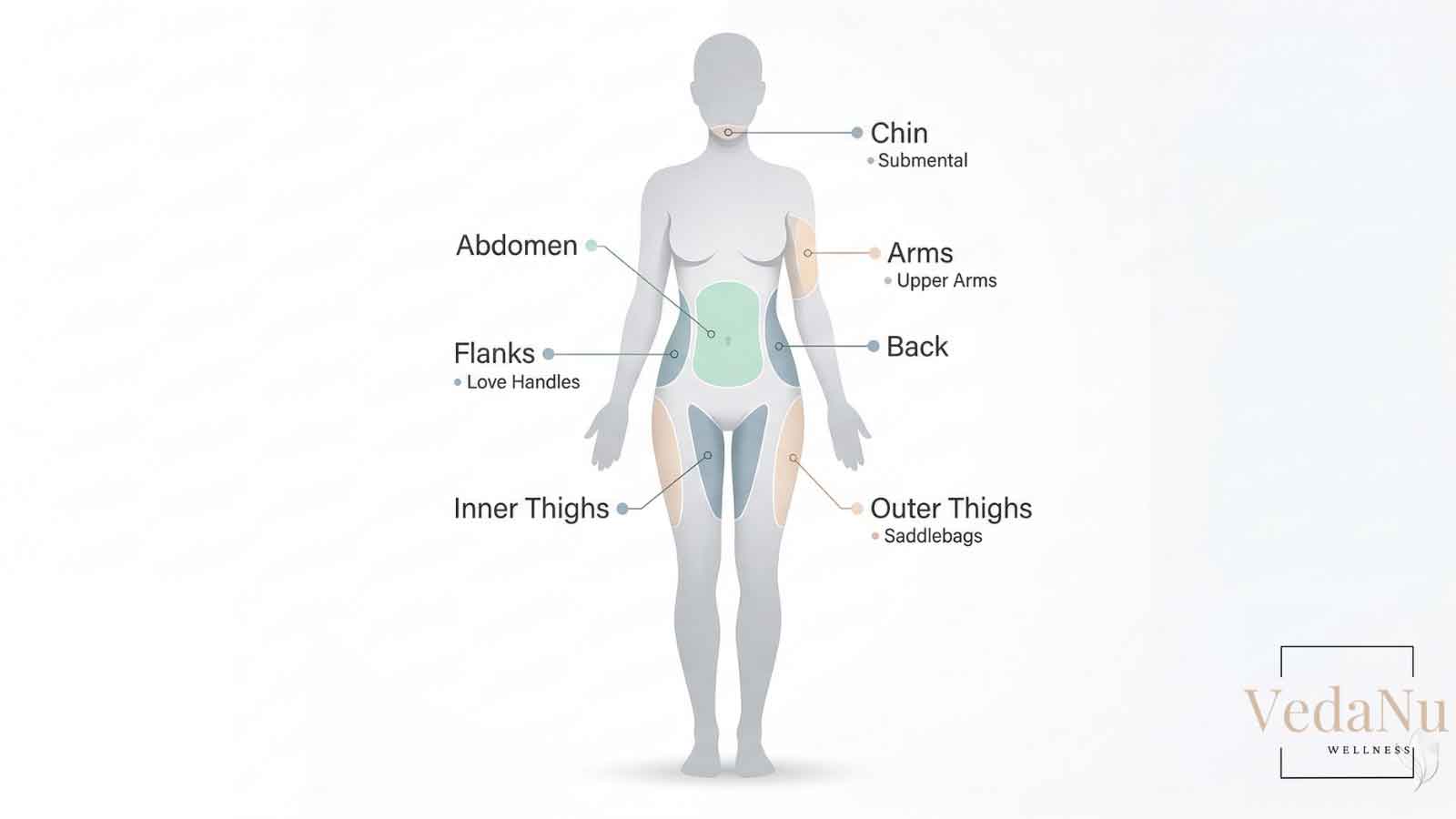
Liposuction can remove stubborn fat from multiple areas of the body, including the abdomen and thighs, the chin and arms, the back, and more. The procedure targets subcutaneous fat, the soft layer sitting just beneath the skin, and works best in areas where genetics or hormones cause localized deposits shaped by genetics, hormones, or body composition. If you have been wondering which areas qualify for treatment, this breakdown covers the questions patients most commonly ask.
Most Common Areas Treated with Liposuction
The areas below represent the most frequently treated zones. Each carries its own anatomical considerations, and your results depend on fat distribution, volume, and the specific goals you bring to your consultation at your preferred plastic surgery clinic.
Refining the Midsection: Abdomen, Flanks, and Waistline
The midsection is the most commonly requested area for liposuction. The abdomen, flanks, lower back, and hips form a connected contour zone, and treating them together typically produces the most balanced outcome.
The abdomen breaks into two distinct zones:
- Lower abdomen: commonly develops isolated fat pockets that affect body proportions, even in patients who maintain a healthy weight
- Upper abdomen: tends to carry a flatter, broader deposit that your surgeon addresses based on how it interacts with the waistline
The flanks and lower back sit at the back of the midsection and contribute to the boxy silhouette many patients describe. Liposuction here refines the transition between the waist and hips, improving the body’s shape from both the side and back views.
Upper Body Sculpting: Arms, Back Rolls, and Bra Line Bulge
The upper arms, back, bra line, and axillary area are zones where fat tends to be fibrous and less responsive to exercise. Common concerns in this region include:
- Upper arm fullness that affects how sleeves fit
- Back rolls that show under clothing
- Bra line bulge that resists targeted exercise
- Axillary puff, the localized fat at the underarm area, which affects how the upper body looks in fitted tops and sleeveless clothing
Chest Contouring for Men and Women
For male patients, when chest fullness involves glandular tissue, excision (Gynecomastia Surgery) is typically recommended and is often combined with liposuction to address the surrounding fatty tissue. Cases involving fat only may be addressed through liposuction alone. A thorough evaluation confirms which approach is best for you.
For female patients, contouring the lateral chest and underarm area can improve the overall silhouette and complement other breast or body procedures.
Chin and Neck Liposuction: Sharpening the Jawline
Submental fat, the fullness beneath the chin and along the neck, often persists after weight loss and dulls jawline definition at any age. The fat deposit is removed through very small, well-concealed incisions beneath the chin, sharpening the jawline and improving the profile.
This area responds well in patients with good skin elasticity. Patients whose primary concern is skin laxity rather than fat volume may benefit from a different or combined approach, which a surgeon evaluates based on your specific anatomy.
Other Areas Liposuction Can Treat
Not every liposuction candidate focuses on the core areas. Some patients come in with very specific proportion concerns that affect confidence just as much as a larger treatment area would.
Inner and Outer Thighs
The inner and outer thighs behave differently as treatment targets:
- Inner thigh fat tends to cause rubbing and proportion concerns when standing with feet together
- Outer thigh fat, sometimes called saddlebags, widens the hip-to-thigh silhouette
Both respond well to liposuction in patients with good skin tone and realistic goals.
Knees, Calves, and Ankles
The knees, calves, and ankles are treatable but require careful evaluation. The fat in these areas is dense, and the skin envelope is tight, which increases the complexity of achieving smooth results. Liposuction here addresses fullness that affects the lower leg’s proportion to the thigh and how clothing fits through the calf and ankle.
Pubic Area
The pubic area, sometimes referred to as the mons pubis or FUPA, can accumulate fat that becomes more pronounced after weight fluctuations or pregnancy. Liposuction in this zone reduces visible fullness and improves how the lower abdomen transitions into the pubic region. It is a frequently searched concern that is often left out of standard liposuction discussions.
Buttocks
The buttocks and the area just beneath them, sometimes called the banana roll, are treatable in select cases. Liposuction here reduces excess volume or addresses the fold beneath the buttock crease. This zone requires precise technique to avoid flattening or altering the natural shape of the buttocks.
How Surgeons Determine the Right Areas to Treat
For plastic surgery clinics that offer liposuction for men and women, treatment planning goes beyond simply targeting the areas a patient points to. Your surgeon evaluates the body as a whole, looking at how fat is distributed across zones and how removing volume in one area affects adjacent contours.
Key factors in that evaluation include:
- Shadow lines and light reflection, which define visible contour transitions
- The relationship between adjacent body zones, such as how the waist connects to the hips or how the neck meets the jawline
- Avoiding over-resection, which can create unnatural hollows or irregular texture
- How the skin in each zone is expected to respond once the underlying volume changes
This is why two patients with similar concerns can end up with different care strategies. The goal is always a result that looks natural to your specific frame.
What Makes a Good Candidate for Liposuction?
The patients who see the best results share a few consistent characteristics:
- Within 30 pounds of their goal weight and maintaining a stable weight
- Carrying localized fat deposits that have not responded to diet and exercise
- Non-smoker
- Skin with enough elasticity to contract smoothly after fat removal
Fat type also matters. Subcutaneous fat, the soft layer just beneath the skin, is what liposuction removes. Visceral fat, which sits deeper around the organs and contributes to a firm, rounded abdomen, does not respond to liposuction. Loose or crepey skin behaves differently and may require a different or combined approach.
What Liposuction Cannot Fix
Liposuction is a sculpting procedure, not a weight loss solution. It does not:
- Produce significant overall weight loss
- Tighten loose or excess skin
- Smooth cellulite, which is a structural skin concern rather than a fat concern
- Remove visceral fat stored around the organs
Patients who approach liposuction as a finishing tool for a body they have already worked to refine tend to be the most satisfied with their results. If texture improvement is part of your goal, raise that separately when discussing your treatment plan.
Skin laxity is a separate concern that liposuction does not address. For patients who want fat removal and skin tightening in the same area, technologies such as Renuvion may be used alongside liposuction to tighten loose skin and improve overall contour.
Read More: How to Maintain Results After Losing Weight
Why Treating Multiple Areas Often Works Best
Treating multiple zones in a single session produces more cohesive results than addressing isolated pockets at separate times. Common combinations include:
- Abdomen and flanks for full midsection contouring
- Inner and outer thighs together for lower body balance
- Back and bra line for upper body smoothing
- Chin and neck for jawline and profile definition
The total volume of fat removed and your overall health determine which combinations are appropriate. Your surgeon structures the approach and techniques around both your aesthetic goals and what is medically safe to achieve in a single procedure.
How Much Fat Can Be Removed Safely?
There is a safe upper limit to how much fat liposuction can remove in a single session, and that threshold varies based on your weight, health, and the number of areas being treated. Your surgeon determines the appropriate volume during consultation based on your individual profile.
For patients with broader fat-reduction goals, a staged approach across multiple sessions may yield safer, more refined results than attempting to address everything at once.
What to Expect During Recovery
Recovery varies depending on how many areas are treated and the overall scope of your procedure. Most patients return to light activity and desk work within two to seven days. Strenuous exercise and heavy lifting should be avoided for at least two weeks.
What you can generally expect in the first weeks after treatment:
- Mild swelling, bruising, and soreness in the treated areas, which gradually resolve
- A compression garment worn over the treated zones to reduce swelling and support the new contour
- Short, gentle walks are encouraged within the first 24 hours to promote circulation
- Full activity and exercise are reintroduced gradually based on your surgeon’s guidance
Final results take time to appear. Swelling can persist for several weeks, and the full contour becomes visible as healing progresses over the following months. Patients who follow their post-operative instructions closely and maintain a stable weight tend to see the most consistent, long-lasting outcomes.
Discuss Your Liposuction Options with Us
If specific areas have frustrated you despite consistent effort, liposuction may be the right option. A professional consultation gives you more than a general idea. It gives you a clear, honest picture of what your anatomy actually supports.
Your surgeon evaluates the body as a whole to:
- Identify which areas will respond well to fat removal
- Recommend whether single-area or multi-area treatment will achieve the result you described
- Avoid over-treating adjacent zones that could create visible imbalances
- Map the treatment to your natural proportions so results look like the best version of you, not an obvious procedure
At VedaNu Wellness, Dr. James Chao is a board-certified plastic surgeon and Fellow of the American College of Surgeons with more than 25 years of experience in body contouring.
Contact us to find out which areas are treatable for your anatomy and what results are realistically achievable.