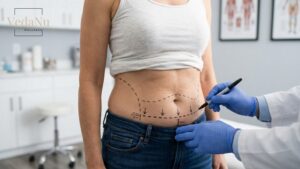
Loose skin after major weight loss or pregnancy can extend beyond the front of the abdomen and continue around the flanks and hips. A standard tummy tuck in San Diego mainly focuses on the central abdomen, which may not address excess tissue that continues along the waist.
When laxity extends farther around the torso, the surgical plan may need to cover more than the front of the abdomen. Understanding how an extended approach differs can help you see when broader contouring may be appropriate.
What Is an Extended Tummy Tuck?
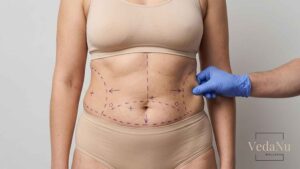
An extended abdominoplasty (the medical term for a tummy tuck) uses a longer incision to remove excess skin and fat across the abdomen and farther toward the flanks. The procedure may also address abdominal wall laxity when needed.
It can improve abdominal and waist contours, but it is not a weight loss procedure and cannot guarantee a specific waist size. Stretch marks within the removed skin may also be removed, while those outside the treatment area will remain. If loose skin extends around most or all of the lower body, Dr. Chao may recommend a lower body lift instead.
Extended or Standard Tummy Tuck: Which Matches Your Body?
The main difference comes down to where your loose skin and tissue extend. Two people may have a similar amount of excess skin but need different surgical plans based on how far that laxity reaches around the waist.
- Standard tummy tuck: A standard tummy tuck in San Diego usually treats the front of the abdomen with an incision that runs from hip to hip. It typically works well when most of the loose skin stays within the central abdominal area.
- Extended tummy tuck: This approach continues beyond the hips to treat laxity along the flanks and sides. It may be more appropriate when laxity extends farther around the waist.
- Lower body lift: When loose skin continues around most of the lower torso, a lower body lift may offer the circumferential correction (surgery that addresses skin around the entire lower torso) needed in those cases. In these situations, post-weight-loss body contouring may better address your goals.
How the Scar Differs
- Standard incision: Usually extends across the lower abdomen from hip to hip.
- Extended incision: Continues farther around the sides to reach loose tissue beyond the central abdomen.
- Scar placement: Surgeons generally place the incision low enough to sit as discreetly as your anatomy and surgical needs allow.
- Scar changes: Scars often soften and fade over time, but they do not disappear completely. If a scar from a previous procedure concerns you, scar revision may be an option once it has fully matured.
The longer incision allows the surgeon to remove loose tissue that extends farther around the waist.
Who May Be a Candidate?
You may be a candidate for an extended tummy tuck if loose skin continues beyond the central abdomen and you are medically prepared for a more extensive procedure and recovery. Exercise can improve muscle tone but cannot remove significant excess skin once it has lost elasticity. Patients who have completed a medical weight loss program or bariatric surgery may be candidates.
Signs an Extended Tummy Tuck May Fit Your Needs
- Tissue extends beyond the hip bones: Loose skin continues into the flanks rather than remaining limited to the front of the abdomen.
- Folds remain along the flanks: Folds at the sides may persist even when the central abdomen appears tighter.
- Your waistline lacks a smooth transition: Laxity affects the contour between the abdomen and sides.
Health and Timing Considerations
- Stable weight: You should be near a weight you can realistically maintain because major fluctuations can affect your results.
- Good overall health: Dr. Chao will evaluate whether you can safely undergo a longer operation and recovery.
- Complete medical history: Share prior surgeries, medical conditions, medications, and supplements during your consultation.
- Realistic expectations: Surgery can improve contour, but it cannot create a specific body shape or guarantee a particular result.
- Future pregnancy plans: Dr. Chao may recommend waiting if you plan to become pregnant because pregnancy can stretch the abdominal muscles and skin again.
- Recovery readiness: You should be prepared for the recovery demands of more extensive contouring.
What Happens During Tummy Tuck Surgery?
Understanding each stage can help you know what to expect before, during, and immediately after surgery.
Planning Before Your Procedure
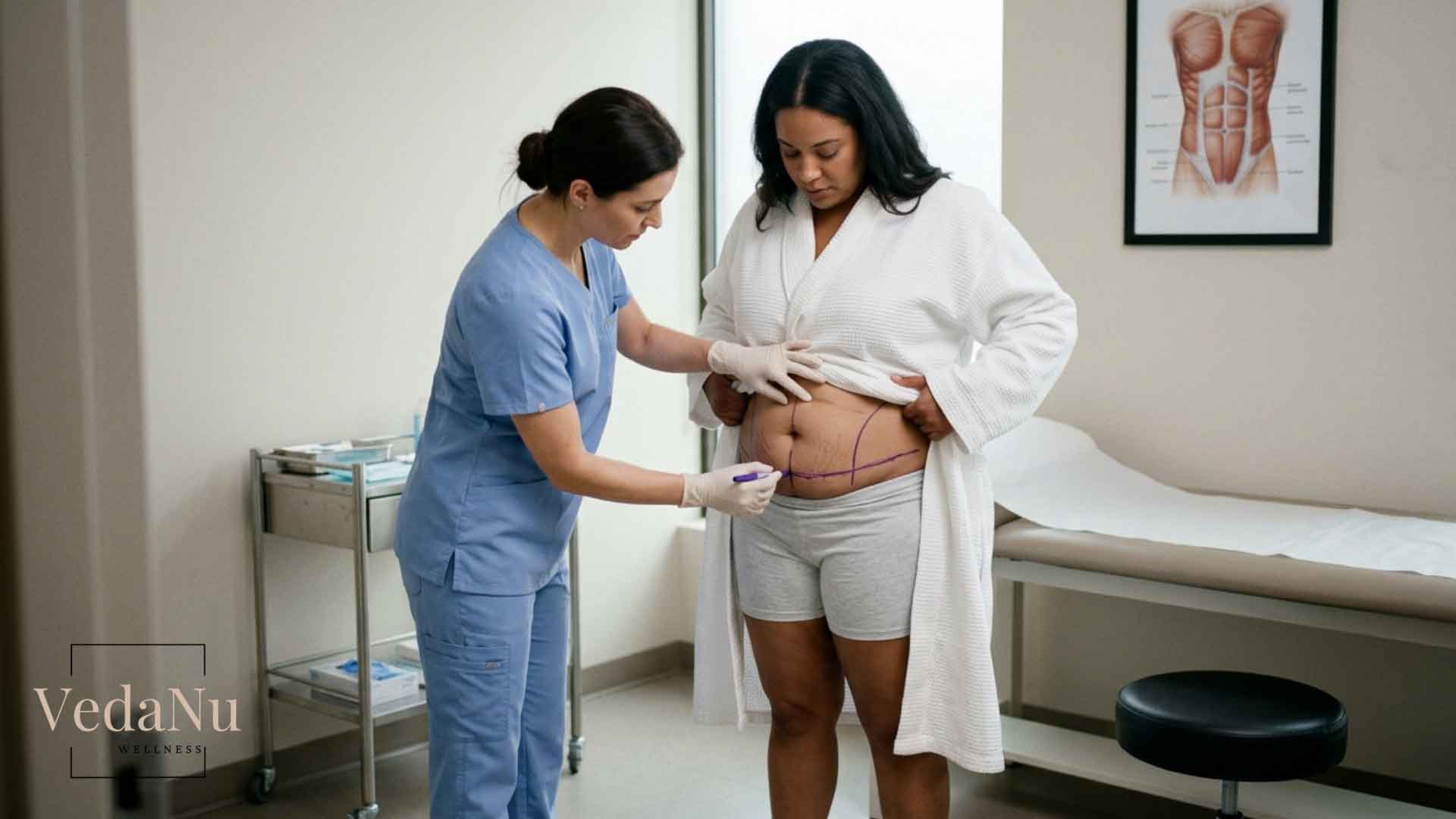
Dr. Chao examines skin laxity, abdominal muscle separation, fat distribution, previous surgical scars, and belly button position. He then plans the incision based on your anatomy and the amount of tissue that needs removal. The evaluation also covers nicotine use because it can reduce blood flow and interfere with healing.
Inside the Operating Room
Extended tummy tuck surgery is performed under general anesthesia (medication that keeps you fully asleep during surgery). Your surgeon removes excess skin and tissue, repairs separated abdominal muscles if the evaluation supports it, and repositions the remaining skin to create a smoother contour.
Some patients have rectus diastasis (separation of the paired abdominal muscles), a condition commonly linked to pregnancy or significant abdominal stretching. When appropriate, Dr. Chao repairs and tightens the abdominal wall during tummy tuck surgery to restore core support. Not every patient needs muscle repair, and your evaluation will determine if it belongs in your surgical plan.
During a full or extended tummy tuck, your belly button stays attached to its underlying stalk. Dr. Chao repositions the surrounding abdominal skin and brings the belly button through a new opening in that skin, which helps maintain natural proportions. The belly button itself is not detached and moved to a different location.
Your surgical team places drains, dressings, and a compression garment as needed to support your early healing. If you are considering additional body contouring procedures, Dr. Chao will determine what can be combined safely based on operative time, treatment area, and safety considerations. Some patients combine an extended tummy tuck with breast procedures as part of a mommy makeover.
Can Liposuction or Skin Tightening Be Added to an Extended Tummy Tuck?
Dr. Chao may combine tummy tuck surgery with liposuction to refine localized fat deposits along the abdomen, flanks, or back.
- Traditional liposuction: Removes localized fat to improve contour around the treated area.
- VASER® Liposuction: Uses ultrasound energy to break up fat before removal, which may allow for more precise contouring with less disruption to surrounding tissues than traditional liposuction.
- Renuvion® Skin Tightening: Combines helium plasma and radiofrequency energy to tighten tissue beneath the skin and may be considered for mild to moderate skin laxity.
- Individualized use: These technologies are not necessary for every extended tummy tuck. Your surgeon may recommend them according to your anatomy, skin quality, and surgical plan.
RELATED ARTICLE: Tummy Tuck vs. Liposuction: Which Procedure Is Right for You?
Tummy Tuck Recovery Timeline and Results
Recovery happens in stages, and an extended procedure may require more planning because the incision extends farther around the torso.
The First Days
You can expect soreness, tightness, swelling, and bruising during the early stage of recovery. You may also walk slightly bent forward at first to reduce tension on the incision. Your surgical team will usually encourage short, careful walks to support circulation, and you will need a responsible adult to drive you home and help during the first few days.
Contact your surgeon right away if you develop severe pain, fever, significant bleeding, or unusual drainage.
Returning to Work and Exercise
Many patients return to light or desk-based work within about 2 to 3 weeks after an extended tummy tuck in San Diego, although recovery time varies. Physically demanding jobs may require a longer break. Strenuous exercise, heavy lifting, and direct core work often remain restricted for about 6 weeks or until your surgeon clears you.
You can make recovery easier by preparing in advance:
- Arrange help with childcare and household tasks.
- Prepare meals before surgery.
- Create a comfortable sleeping area that keeps your upper body slightly elevated.
If you’re traveling in for surgery, our out-of-town patient resources can help you plan your stay. You’ll receive a tummy tuck recovery plan based on your health, procedure, and healing progress.
When Results Appear
You may notice a flatter abdominal contour early, but swelling can temporarily hide your final result. Your swelling usually improves gradually over the following weeks and months, and your scars continue to soften and fade over time.
Maintaining a stable weight can help preserve your results, although future pregnancies, weight changes, and natural aging can continue to affect your contour.
READ MORE: Tummy Tuck Recovery: Week-by-Week Guide
Risks and Safety
Extended abdominoplasty carries the same general risks associated with major surgery, and the longer incision requires careful wound care during recovery.
Potential risks may include:
- Bleeding or fluid buildup: Hematoma (a pocket of collected blood) or seroma (fluid buildup) can develop beneath the skin.
- Healing concerns: Infection, delayed wound healing, and noticeable scarring are possible.
- Circulation risks: Blood clots can occur after major surgery.
- Sensation or contour changes: Numbness, persistent swelling, or asymmetry may occur during recovery.
You can support safer healing by following your surgeon’s instructions for medications, nutrition, nicotine avoidance, compression garments, activity limits, and follow-up care. Careful preparation can reduce certain risks, but no surgical procedure is risk-free.
Planning Your Consultation
The cost of an extended tummy tuck in San Diego depends on factors such as surgical complexity, anesthesia and facility fees, aftercare, and any procedures performed at the same time. VedaNu Wellness offers financing options to help you manage the cost of surgery. Your consultation will also clarify the recommended approach, your recovery expectations, scar placement, and your full treatment plan.
Bring questions that help you understand both the procedure and recovery:
- Am I better suited to a standard, mini, or extended approach?
- Where exactly will my incision begin and end?
- Will muscle repair or liposuction be part of my plan?
- How much time should I plan away with tummy tuck recovery in mind?
- What follow-up care is included, and how are complications handled?
Learn more in our guide comparing a full tummy tuck vs. mini tummy tuck.
These questions can help you understand how tummy tuck and abdominoplasty planning changes based on the extent of correction you need.
Schedule Your Extended Tummy Tuck Consultation in San Diego
Dr. James Chao, a board-certified plastic surgeon and Fellow of the American College of Surgeons (FACS) with more than 25 years of experience in plastic, reconstructive, and hand surgery, provides extended tummy tuck surgery at VedaNu Wellness. During your consultation, Dr. Chao can determine whether a standard or extended tummy tuck approach may be appropriate and explain what you can realistically expect from surgery and recovery.
VedaNu Wellness serves patients from both our San Diego and Beverly Hills locations, including communities such as La Jolla, Del Mar, Rancho Santa Fe, Carlsbad, Encinitas, and Carmel Valley. Contact VedaNu Wellness to schedule your tummy tuck consultation and discuss the approach that best fits your body and goals. Ask about current specials when scheduling.