The scar is often the first thing patients want to talk about before a tummy tuck, and the last thing they worry about once it fades. A tummy tuck in San Diego at VedaNu Wellness leaves a low horizontal incision that sits beneath most swimwear and underwear, and a small scar around the navel when the belly button is repositioned.
Both scars change significantly over the months that follow. This guide covers where your scars will sit, how they heal through three distinct stages, and what you can do to support the best possible result.
Where Will Your Tummy Tuck Scar Sit on Your Body?
Scar placement is one of the most common questions patients ask before abdominoplasty. The location of your incision depends on the type of tummy tuck performed and the area being treated.
The Horizontal Line Below the Bikini Line
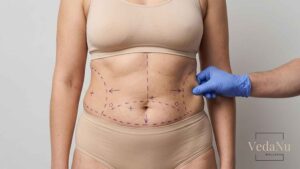
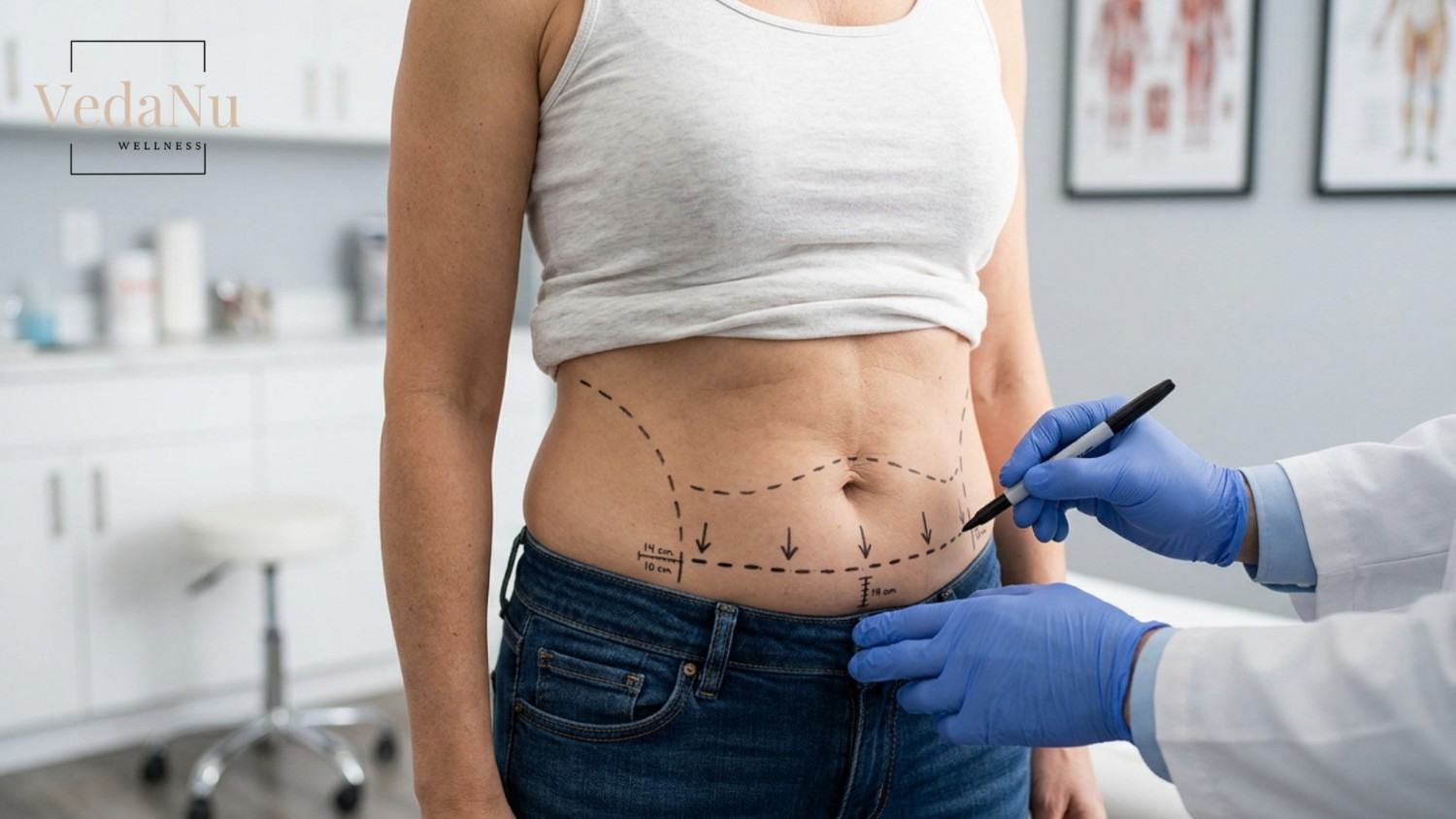
The main incision sits low across the lower abdomen, typically where underwear, swimwear, and waistbands can cover it. During your pre-op visit, Dr. Chao evaluates the incision location based on your body shape and surgical goals.
Bringing your usual swimsuit or underwear to your appointment can help you discuss your preferred scar placement and how it fits with your lifestyle.
The Small Scar Around Your Navel
A full abdominoplasty repositions the belly button through the tightened abdominal skin, creating a small circular scar around the navel. As healing progresses, the scar often blends into the natural folds of the belly button area.
The length of your tummy tuck scar depends on how much excess skin needs to be removed. If you have more skin laxity, you may need a longer incision. If your excess skin is more limited, a shorter incision may be enough.
During your consultation for tummy tuck surgery, Dr. Chao will discuss the approach that best matches your goals and explain how incision length affects your overall contour.
How Do Tummy Tuck Scar Patterns Change by Technique?
Tummy tuck and abdominoplasty refer to the same procedure, but different techniques create different incision patterns.
Mini Tummy Tuck
A mini tummy tuck focuses on loose skin below the belly button. It uses a shorter, lower incision, and the belly button usually stays in its original position, so it does not create a separate navel scar.
This approach provides a more limited correction compared with a full tummy tuck.
Full Tummy Tuck
A full tummy tuck uses a longer lower abdominal incision and creates a scar around the belly button. It addresses loose skin above and below the navel and may include abdominal muscle repair when needed.
A full tummy tuck is typically the right fit if you need broader abdominal contouring. For a deeper comparison, read our guide on full tummy tuck vs. mini tummy tuck.
Extended Tummy Tuck
An extended tummy tuck continues the incision beyond the hips to address excess skin along the flanks. This approach may benefit patients with more significant skin laxity, including those after major weight loss.
The longer incision allows your surgeon to address a wider area of excess skin. An extended tummy tuck can be combined with liposuction to refine surrounding contours. Scar placement should be discussed during consultation based on your anatomy and goals.
ALSO READ: Tummy Tuck vs. Liposuction: Which Procedure Is Right for You?
What Are the Three Healing Stages After a Tummy Tuck in San Diego?
Scars do not fade on a steady curve. Tummy tuck recovery moves the incision through three biological stages, and knowing which one you are in prevents a great deal of unnecessary worry at week six.
Weeks 1 to 4: Inflammation
During the first few weeks, the incision may appear red, raised, or swollen. Some firmness around the scar is common as your body begins repairing the tissue.
Following your recovery instructions, wearing your compression garment as directed, and avoiding unnecessary tension on the incision can support proper healing during this stage.
Weeks 5 to 12: Scar Remodeling Begins
As your body produces new collagen, the scar may temporarily appear darker, thicker, or more noticeable. Some patients also experience itching or firmness during this phase.
These changes are part of the normal scar development process as your body strengthens and reorganizes the healing tissue.
Months 3 to 18: Scar Maturation
During this stage, the scar enters a slower remodeling phase as collagen reorganizes and the tissue continues to mature. The scar gradually becomes softer and blends more naturally with the surrounding skin.
Most visible changes occur during the first several months after a tummy tuck in San Diego, with continued refinement throughout the first year and beyond.
LEARN MORE: Tummy Tuck Recovery: Week-by-Week Guide
How Can You Support Better Tummy Tuck Scar Healing?
Tummy tuck scars improve gradually, and their final appearance depends on several factors, including your healing response, surgical technique, skin quality, and how well you follow your aftercare plan. Your surgeon can provide guidance on the right scar care approach based on your recovery progress.
Follow Your Scar Care Plan
Once your incision has fully closed and your surgeon approves scar treatment, silicone gel or sheeting may help support scar softening and flattening. VedaNu Wellness can recommend appropriate scar care options as part of your personalized recovery plan based on your healing progress.
Consistent scar care over time supports continued improvement and helps your incision mature as smoothly as possible.
Protect Your Scar From Sun Exposure
New scar tissue can be more sensitive to UV exposure, which may increase the risk of discoloration. Protect the area with clothing and apply high-SPF sunscreen once your skin has healed and your care team clears you.
Reduce Tension During Recovery
Heavy lifting, deep stretching, and intense core exercises can pull on your healing incision and affect how your scar develops. Following your surgeon’s activity guidelines during tummy tuck recovery can help protect the incision as it continues to heal.
Gentle Scar Massage After Clearance
After your surgeon approves massage, gentle scar massage may help soften firm areas and improve skin mobility. Some patients may also use supportive products such as SHEALD Recovery Balm to maintain skin hydration during recovery.
What Factors Affect Your Final Scar Appearance?
Your final scar appearance can vary based on several individual factors:
- Surgical technique: How your incision is planned and closed can influence how your scar develops.
- Skin quality and tone: Your skin characteristics affect how noticeable any pigmentation changes or texture differences become as you heal.
- Individual healing response: Genetics and your body’s natural repair process play a role in scar formation.
- Health habits: Smoking and nicotine use may affect blood flow and your body’s ability to heal properly.
- Aftercare consistency: Following your surgeon’s instructions throughout tummy tuck recovery supports proper healing.
In-Office Scar Treatment Options Available
Most tummy tuck scars improve with time and proper at-home care. For scars that need additional support, your surgeon may recommend options such as post-op scar treatments, CO2 laser resurfacing to improve texture and pigmentation concerns, or scar revision when appropriate.
Scar revision is usually considered once the scar has fully matured and the tissue has settled into its final texture. The right timing depends on how the scar has developed and your individual recovery progress.
Plan Your Tummy Tuck Incision With VedaNu Wellness
The best time to discuss your scar is before surgery. During your consultation, your surgeon reviews incision placement, surgical goals, and the approach that best fits your anatomy and needs.
Dr. James Chao is a board-certified plastic surgeon and Fellow of the American College of Surgeons (FACS) with more than 25 years of experience in plastic, reconstructive, and hand surgery. Patients considering tummy tuck procedures at VedaNu Wellness can discuss their options at either the San Diego or Beverly Hills location and create a personalized surgical plan.
Patients planning a mommy makeover that includes a tummy tuck should discuss scar placement for all procedures during their consultation. VedaNu Wellness offers financing options to help you plan for your procedure, and you can ask about current specials when scheduling. If you are traveling for surgery, our out-of-town patient resources can help you plan your visit.
We welcome patients across San Diego County, including La Jolla, Del Mar, Rancho Santa Fe, Carlsbad, Encinitas, and Carmel Valley. Call 858-222-2883 or request a consultation to learn more about your procedure.