You want to look rested, not different, and that distinction matters more than any other factor in facelift surgery. Patients considering a facelift in San Diego often arrive with one overriding concern: that the result will look tight, artificial, or nothing like them.
At VedaNu Wellness, that concern drives every surgical decision Dr. Chao makes, including technique selection and how much correction your facial structure can comfortably support.
What Makes a Facelift Look Natural Instead of Pulled?
A natural facelift focuses on improving facial balance while maintaining your existing expressions and proportions.
How Can You Recognize a Natural Facelift Result?
A well-executed facelift should create a refreshed appearance without making the face appear overly tight or altered. When evaluating facelift results, focus on facial balance, movement, and how well the outcome fits the patient’s overall features.
Signs of a natural result:
- Facial proportions that complement the patient’s original features
- Expressions that remain uninhibited, including a full smile
- A refreshed appearance where others notice you look rested
- Smooth transitions between the cheeks, jawline, and neck
- Skin that moves naturally without looking overly tight
Relying Too Much on Skin Tightening
Earlier facelift techniques focused heavily on removing excess skin and closing the remaining skin under tension. Because skin is not designed to provide structural support, relying on the surface layer alone may create a tighter appearance instead of a naturally refreshed one.
Using the Wrong Direction of Lift
Facial tissues descend vertically with age, but outdated techniques pulled them horizontally, backward toward the ears. Modern approaches lift in the direction the tissue actually fell, which produces a more youthful contour.
Failing to Address Deeper Facial Support
The deeper layers of the face include the SMAS (superficial musculoaponeurotic system, a supportive tissue layer that helps maintain facial structure) and surrounding ligaments.
These structures play an important role in facial contour and support. Addressing these underlying structures rather than focusing only on surface skin can help create results that appear more natural and balanced.
Setting Expectations That Do Not Match Anatomy
A facelift works best when the surgical plan aligns with what your facial structure can support. Creating dramatic changes in one area while leaving surrounding areas untreated can affect overall balance.
A balanced result requires evaluating the relationship between the cheeks, jawline, neck, and skin quality, and planning the correction as a coordinated approach rather than an isolated fix.
How Does VedaNu Wellness Create Natural-Looking Facelift Results?
For patients seeking a facelift in San Diego, Dr. James Chao selects the facelift technique based on your specific anatomy, aging pattern, and goals. Surgeons may recommend different approaches depending on which areas need support or refinement.
Deep Plane Repositioning
A deep plane facelift works with deeper facial tissues by releasing and repositioning the midface, jawline, and nasolabial (the area between the nose and the corners of the mouth) tissues as a connected unit beneath the skin. This approach can allow the surgeon to restore youthful contours while reducing the amount of tension placed on the skin.
This technique is particularly suited for patients with significant midface descent or nasolabial fold deepening where surface-level correction alone would not produce a lasting result. Many patients combine a facelift with a neck lift to address laxity below the jawline for a more complete result.
Eyelid surgery is another common complement when patients want to address the eye area in the same session. A brow lift may also be recommended when brow descent contributes to upper-face aging.
Redraping Skin Over Restored Contours
After deeper tissues are repositioned, the skin can be gently adjusted over the new facial structure. This allows the skin to follow the restored contours rather than acting as the primary source of support.
The goal is a balanced contour that preserves unrestricted facial movement.
Incision Placement and Scar Considerations
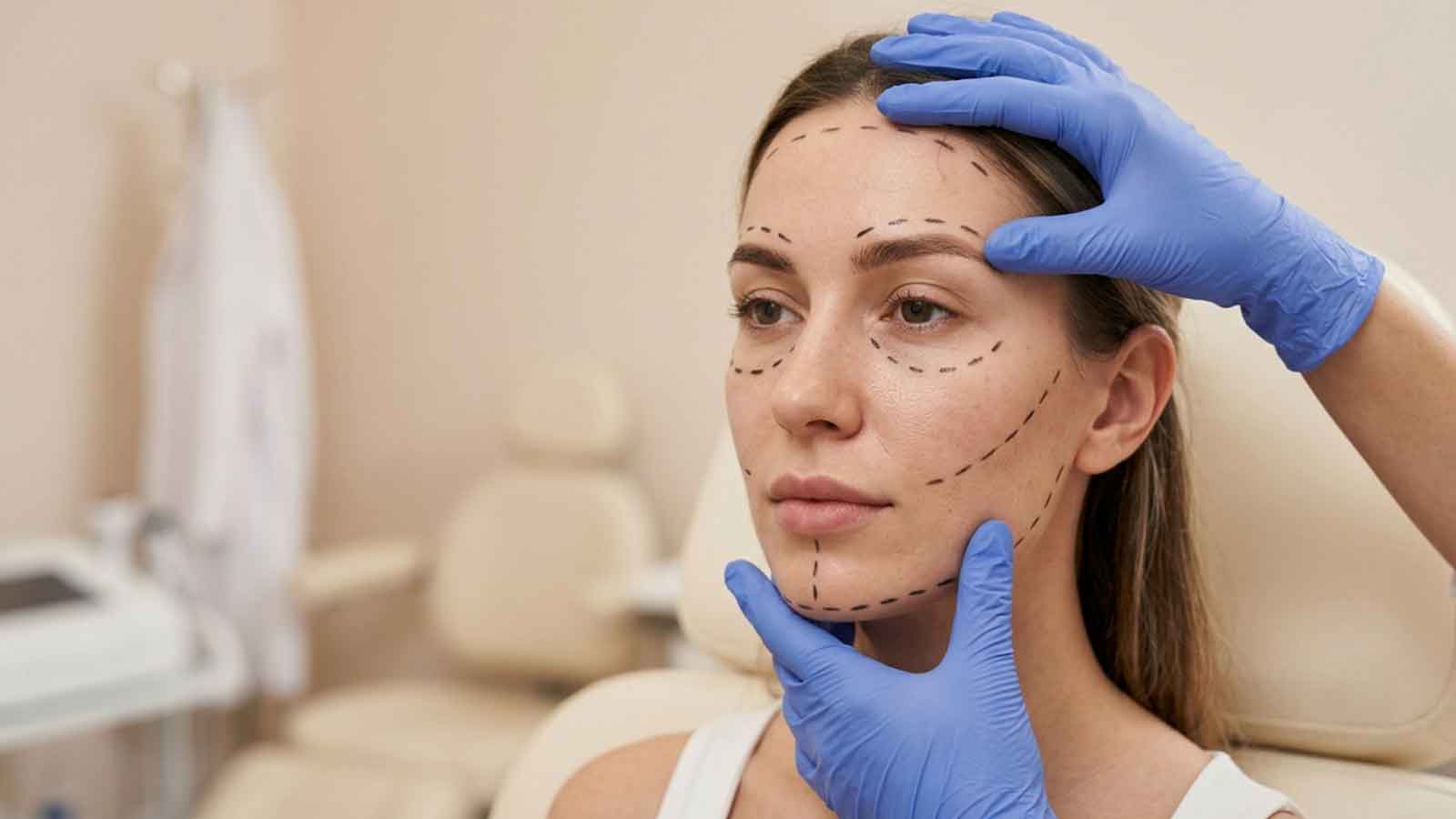
Facelift incisions are carefully planned around natural facial anatomy, including areas near the ear and hairline. Placement, healing, and individual skin characteristics all influence how visible facelift (rhytidectomy, the medical term for facelift surgery) scars become over time.
VedaNu’s post-op scar treatment program, including BioCorneum® silicone scar gel and SHEALD Recovery Balm, supports optimal scar maturation. Our medical-grade skincare products can further support skin quality during and after recovery.
Restoring Volume Along With Facial Position
Aging affects both facial position and volume. Some patients benefit from addressing volume loss through facial fat grafting alongside facelift surgery.
Combining structural support with volume restoration can help create a softer, more balanced appearance when appropriate.
Endoscopic Facelift
An endoscopic facelift (a minimally invasive approach using small incisions and a thin camera to guide the procedure) uses specialized instruments through smaller incisions. It is often used for specific areas, such as the brow or upper face, depending on the patient’s needs.
The best technique depends on the areas being treated and the patient’s individual goals. Patients with early signs of aging may benefit from a mini facelift, which involves a shorter procedure and faster recovery than a full facelift.
What Can You Control as a Patient?
Your surgeon determines the technique used during your facelift, but your preparation and decision-making also play an important role in creating a satisfying experience. Choosing the right surgeon, communicating your goals clearly, and understanding the recovery process can help you feel more confident at every stage.
Choosing the Right Facelift Surgeon
Experience, surgical judgment, and a tailored approach all matter when selecting a facelift surgeon. During your consultation, ask questions that help you understand the recommended plan and why it fits your facial anatomy.
Consider asking about:
- Board certification and specific experience in facial rejuvenation, such as Dr. Chao’s 25+ years of plastic, reconstructive, and facial surgery
- Which facial structures the surgeon plans to address and why
- How the approach will be customized to your specific concerns
- What recovery may look like based on the recommended technique
A thorough consultation should help you understand the reasoning behind your treatment plan rather than focus only on the procedure name.
Communicating Your Facelift Goals
Sharing your goals clearly helps your surgeon create a plan that matches your expectations. Bringing personal photos from earlier years can provide helpful context about your facial structure and how you would like to restore certain features.
Understanding the Facelift Recovery Process
Healing takes time, and early changes do not represent your final outcome. Swelling, tightness, and changes in sensation are common during the initial recovery period as your tissues adjust.
Most patients feel comfortable in public within two weeks, with final results stabilizing around six months. Following your surgeon’s recovery instructions and attending follow-up appointments can help support proper healing.
Understanding Facelift Cost Factors
Facelift cost varies depending on several factors, including the technique recommended, areas being treated, anesthesia, facility fees, and the complexity of your individual procedure.
A tailored facelift plan may involve different levels of surgical work based on your anatomy and goals. Understanding what is included in your facelift cost can help you compare treatment options more clearly. VedaNu Wellness offers financing through Cherry, CareCredit, and PatientFi. Visit our financing page for details.
Schedule Your Facelift Consultation at VedaNu Wellness
A natural facelift outcome begins with a detailed assessment of your facial anatomy, including changes in tissue position, volume loss, skin quality, and facial movement. Patients considering a facelift in San Diego can meet with our team at our San Diego location, serving patients from La Jolla, Del Mar, Rancho Santa Fe, Carlsbad, Encinitas, Carmel Valley, and surrounding Southern California communities. VedaNu Wellness also serves patients from the Beverly Hills and Los Angeles area through our second clinic location.
Dr. James Chao is a board-certified plastic surgeon and Fellow of the American College of Surgeons (FACS) with more than 25 years of experience in plastic, reconstructive, and hand surgery. His extensive training and experience allow him to create individualized treatment plans focused on facial harmony, natural-looking results, and each patient’s goals.
Schedule a consultation to discuss your facelift options and learn which approach may best fit your anatomy and aesthetic goals. Call 858-222-2883 or request a consultation with VedaNu Wellness. You can also explore our facelift procedure, other facial procedures, or learn how long a facelift lasts before your visit.
Frequently Asked Questions
How long does a natural facelift last?
Facelift results last an average of 7 to 10 years, though longevity varies based on genetics, sun exposure, skincare habits, and overall health. Because a structural lift repositions deeper tissue rather than relying on skin tension, results tend to soften gradually rather than relapse unevenly.
What is the difference between a deep plane facelift and a traditional facelift?
A deep plane facelift releases the retaining ligaments and moves the midface, jawline, and nasolabial tissues as one connected unit, so the skin closes with far less tension. Traditional approaches lift the SMAS layer or the skin with more limited release. Dr. Chao determines which approach fits your degree of midface descent and tissue laxity.
Does a mini facelift look more natural than a full facelift?
Not by default. A mini facelift treats a smaller area with shorter incisions, and it can still look tight if the correction relies on skin tension. Matching the extent of surgery to the extent of your aging matters more than choosing the smaller operation. Our comparison of facelift and mini facelift explains where each one fits.