You have a larger breast size in mind, but what if your skin and existing tissue aren’t ready for that change? Your desired results may require a more gradual surgical plan. Staged breast augmentation in San Diego is an approach worth discussing when a single procedure may not suit your anatomy. That said, not every patient who wants XL implants needs staged surgery. Your surgeon makes that call based on your anatomy and the results you want.
At VedaNu Wellness, board-certified plastic surgeon Dr. James Chao considers your individual needs and aesthetic goals when discussing surgical options. Your consultation can help you understand what’s realistic for your body before making a decision.
Why Does XL Breast Augmentation in San Diego Sometimes Need Two Stages?
Traditional breast augmentation places the selected implants during one operation. A staged approach uses separate procedures to prepare the tissue before final implant placement. Your surgeon may consider this option when your existing tissue cannot comfortably accommodate a substantial size increase. Some patients with XL goals reach them in a single operation, and an exam shows which path fits you.
Larger Implants Place More Pressure on Your Breast Tissue
Larger breast implants place greater demands on your skin and supporting tissue, especially when you want more fullness and projection. If your skin and support structures fall short of what the implant demands, you may face a higher risk of poor positioning, visible implant edges, or changes in breast shape.
The amount of available breast tissue and the support beneath your skin affect how much additional volume your body can accommodate. Your plastic surgeon must weigh these limits before recommending a significant increase in volume.
Tight Skin and Limited Breast Tissue May Require Staging
You may be considered for staged augmentation if you have tight skin, limited natural breast tissue, or a history of breast surgery. These factors can make immediate placement of larger implants more challenging.
Previous procedures may also leave scar tissue or change the way your breast tissue stretches. Your plastic surgeon evaluates these conditions to determine if gradual expansion is appropriate or if another approach would better suit your needs.
How Does Staged Breast Augmentation Surgery Work Step by Step?
A tissue expander is a temporary, adjustable device that gradually creates room for a future implant. Surgeons can increase its volume with sterile saline during scheduled visits. The process involves four main phases, but your timeline depends on your healing and the specific device used.
- Stage 1: A surgeon places the temporary tissue expander during your first operation.
- Expansion: Your care team adds saline during office visits over several weeks to several months.
- Stabilization: Your body adjusts to the new volume, and timing depends on your tissue response.
- Stage 2: Your surgeon replaces the expander with your final implants once your tissue is ready.
What Happens During Stage 1?
During your first surgery, your surgeon creates a space for the temporary expander and positions it beneath your breast tissue or chest muscle, depending on your anatomy.
Your initial recovery focuses on incision healing, swelling management, and activity restrictions. You’ll need to follow your postoperative instructions and avoid activities that place unnecessary strain on the surgical area. Your plastic surgeon will determine when the area has healed enough to begin saline fills.
Expansion Visits Gradually Increase Breast Volume
During each scheduled visit, your care team uses a small needle to add sterile saline through the expander’s fill port. You may feel temporary pressure or tightness as the device fills.
Your surgeon checks your skin condition, breast symmetry, and incision healing before making further adjustments. If you experience excessive tightness or your skin shows signs of stress, the surgeon may delay the next fill or extend your treatment timeline.
These adjustments help your care team respond to your healing rather than follow a fixed fill schedule.
What Happens During the Stabilization Period?
After your final saline fill, your plastic surgeon may recommend a waiting period before the second surgery. During this time, your care team assesses how the expanded area is healing to determine when implant exchange is appropriate.
Your surgeon should also discuss the expected exchange date and the temporary expander’s approved duration of use. Slow healing or a surgical complication may change the original plan.
Stage 2 Replaces the Expander With Your Final Implants
During the second surgery, your surgeon removes the temporary expander and places your final implants. The surgeon may use your existing incision and adjust the implant pocket to achieve appropriate positioning and support.
You’ll need another recovery period after this procedure. Swelling gradually decreases, and your breasts continue to settle over the following weeks and months. Your surgeon will explain your activity restrictions and when you can expect a more stable appearance.
LEARN MORE: Breast Implants, Saline vs. Silicone: What’s Right for You?
Who Is a Good Candidate for Staged Breast Augmentation in San Diego?
Your overall health, surgical expectations, and ability to complete a multi-stage treatment plan help determine your eligibility. An XL goal alone doesn’t make staging necessary. Your eligibility depends on how your anatomy and the results you want line up.
Good Health and Realistic Expectations Matter
You may be a suitable candidate if you’re in good overall health, do not use tobacco or nicotine products, and understand the limitations of surgery. Staged augmentation also requires regular follow-up visits and enough recovery time between procedures.
Your surgeon will review your medical history, current medications, and supplements that could affect healing. Poorly controlled medical conditions may increase surgical risks and require further evaluation before proceeding.
You should also understand that your final implant size may differ from your original preference if your skin and soft tissue fall short of what that size requires.
Your Anatomy Determines the Appropriate Implant Size
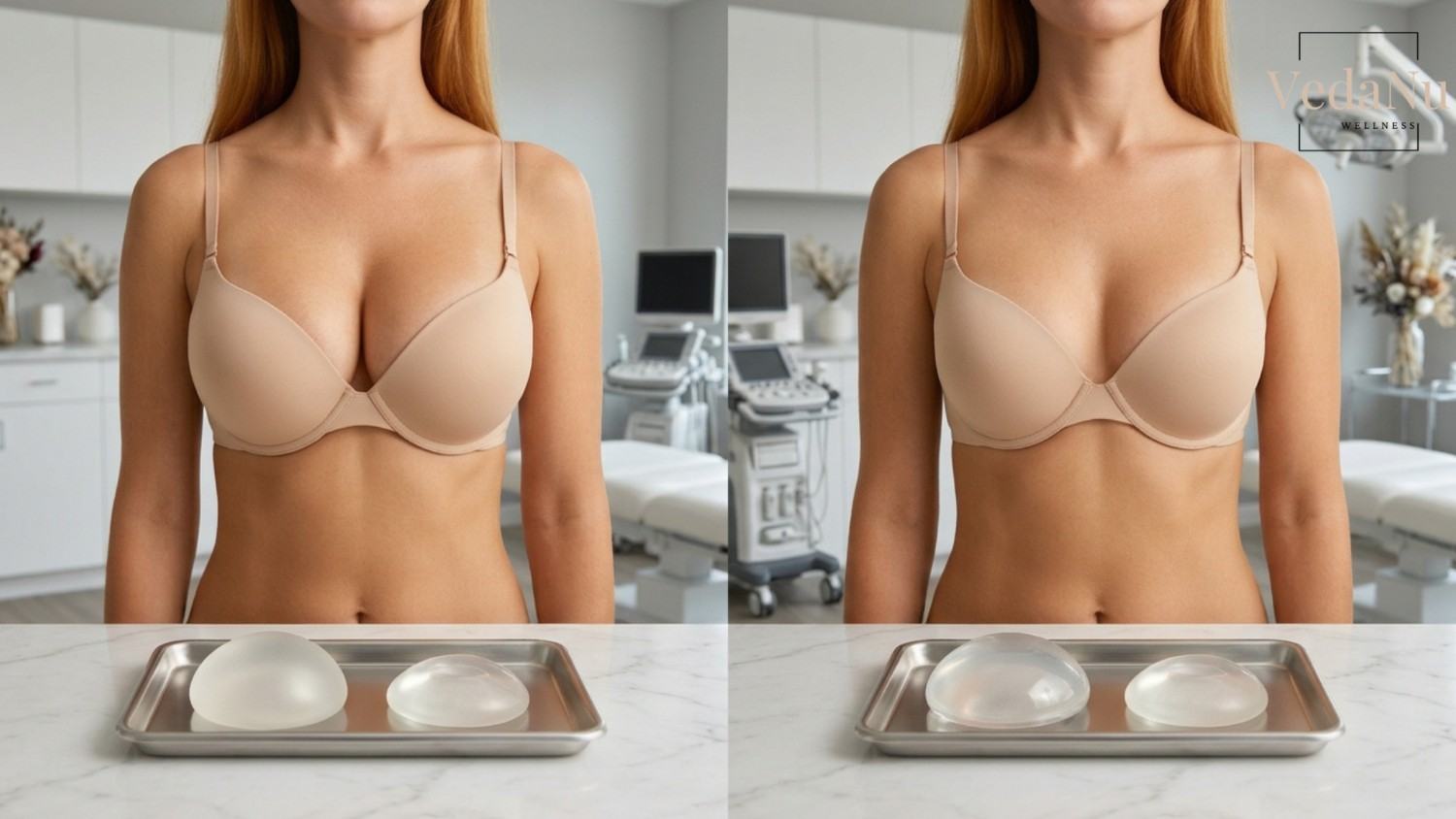
XL is an informal term for larger breast implants rather than a standardized medical size. Bra cup sizes also vary between manufacturers, making them unreliable for surgical planning.
Instead, your surgeon considers your chest width, breast tissue, skin elasticity, and the projection you want when recommending implants. Both silicone and saline implants may be options, depending on your tissue coverage, the appearance you want, and your personal preferences.
Your preferred XL appearance may be achievable through different implant options, but larger implants aren’t appropriate for every body. If the size you want exceeds what your anatomy can safely support, your surgeon may recommend a smaller implant, different projection, or an alternative surgical plan.
Important Questions to Ask During Your Consultation
Bring these questions to your consultation to better understand your options before committing to breast augmentation surgery.
- Can my skin and breast tissue support my goal size in one procedure, or would staging be more appropriate?
- Which implant size, profile, and placement best suit my anatomy and aesthetic goals?
- How many fill visits might I need, and what factors could affect my treatment timeline?
- What surgical risks and possible complications should I consider?
- How will you determine when my tissue is ready for the final implants?
READ MORE: Breast Implant Sizes Explained, How to Choose Without Regret
What Are the Benefits, Limitations, and Risks of Staged Breast Augmentation?
Staged augmentation may offer advantages for selected patients, but it also introduces additional surgical risks, recovery demands, and costs. Understanding these tradeoffs can help you evaluate the procedure alongside other breast enhancement options.
Potential Benefits of Staged Breast Augmentation
Gradual stretching may help prepare selected patients for larger implants when immediate placement would put excessive tension on their existing skin and soft tissue.
Potential benefits include:
- Reduced initial tissue tension: Controlled fills may limit the pressure associated with placing a larger implant into tight skin during one operation.
- Improved preparation for implant placement: Gradual expansion may create additional space for an implant that would otherwise be difficult to accommodate.
- More flexibility during treatment: Your surgeon can evaluate how your body responds before deciding if the planned implant exchange remains appropriate.
You must weigh these potential advantages against the risks of tissue expanders and an additional operation. Staging does not eliminate complications, and it cannot confirm in advance that your goal size will suit your anatomy.
Limitations of Staged Breast Augmentation
Staged breast augmentation requires more planning and time than a single procedure. Before choosing this approach, consider these limitations:
- Multiple procedures and recovery periods: You’ll undergo separate operations for expander placement and final implant exchange, each requiring time for healing.
- Additional visits and a longer schedule: Fill appointments and follow-up examinations may extend your treatment over several weeks or months.
- Temporary changes in appearance: Your breasts may feel firmer or look different while the expanders remain in place.
- Higher overall costs: Additional surgery, medical appointments and related care may increase your total expenses.
- Uncertain final implant size: Even after the stretching phase, your surgeon may recommend a different size if your anatomy still falls short of the original goal.
Complications or delayed healing may also postpone your second surgery. Your surgeon will discuss these possibilities before you begin treatment.
Risks of Staged Breast Augmentation
Like any surgical procedure, staged augmentation carries potential complications. Tissue expanders and breast implants may involve risks such as:
- Infection: An infection around the surgical area may require medication, device removal, or additional surgery.
- Pain or discomfort: Fills or surgery may cause discomfort that requires medical assessment or treatment.
- Skin thinning or tissue damage: Excessive tension or reduced blood supply can affect tissue health.
- Device rupture: An expander or implant may leak or rupture and require replacement.
- Fluid buildup: Fluid may collect around the surgical area, creating swelling or discomfort.
- Implant positioning problems: Your final implants may shift or settle unevenly.
- Scarring and capsular contracture: Scars may become noticeable, or scar tissue may tighten around an implant.
- Changes in breast sensation: Surgery may temporarily or permanently affect sensation in your breasts or nipples.
Contact your care team promptly if you develop increasing pain, spreading redness, fever, sudden swelling, or concerning skin changes during recovery.
Larger implants can also place additional stress on your breast tissue over time, potentially contributing to stretching, sagging, or the need for revision surgery.
Breast implants are not lifetime devices. You may eventually need removal, replacement, or another procedure because of complications or changes in appearance. Silicone implant ruptures can also occur without noticeable symptoms, so your surgeon should discuss recommended monitoring.
Rare implant-associated cancers are another consideration. These include breast implant-associated anaplastic large cell lymphoma (BIA-ALCL), which occurs more frequently with textured implants, and other rare cancers reported in the scar tissue surrounding implants.
You can review the FDA’s breast implant patient guidance for more information about implant risks and long-term monitoring.
LEARN MORE: How Long Do Breast Implants Last? Lifespan and Replacement Facts
Plan Your Staged XL Consultation at VedaNu Wellness
Dr. James Chao, MD, FACS (Fellow of the American College of Surgeons), is a board-certified plastic surgeon with more than 25 years of surgical experience, including breast surgery. Dr. Chao specializes in extra-large breast implants. He completed his undergraduate studies at Stanford with honors, earned his MD at NYU, and trained at NYU and Bellevue.
At VedaNu Wellness, you can discuss your target breast size, available surgical options, and realistic expectations with a surgeon who understands the importance of individualized care. Dr. Chao performs surgeries at an accredited outpatient surgical facility.
VedaNu Wellness welcomes patients from La Jolla, Del Mar, Rancho Santa Fe, Carlsbad, Encinitas, and Carmel Valley. You can schedule your consultation in San Diego at 8901 Activity Road, Suite 102, San Diego, CA 92126, or in Beverly Hills at 433 N Camden Drive, Suite 610, Beverly Hills, CA 90210, or book an appointment online.
VedaNu Wellness offers financing options through Cherry, CareCredit, and PatientFi. You can also ask about current special offers when planning your surgery.
Traveling from outside the area? Explore our out-of-town patient resources and discuss your travel plans early, as staged treatment may require multiple visits.