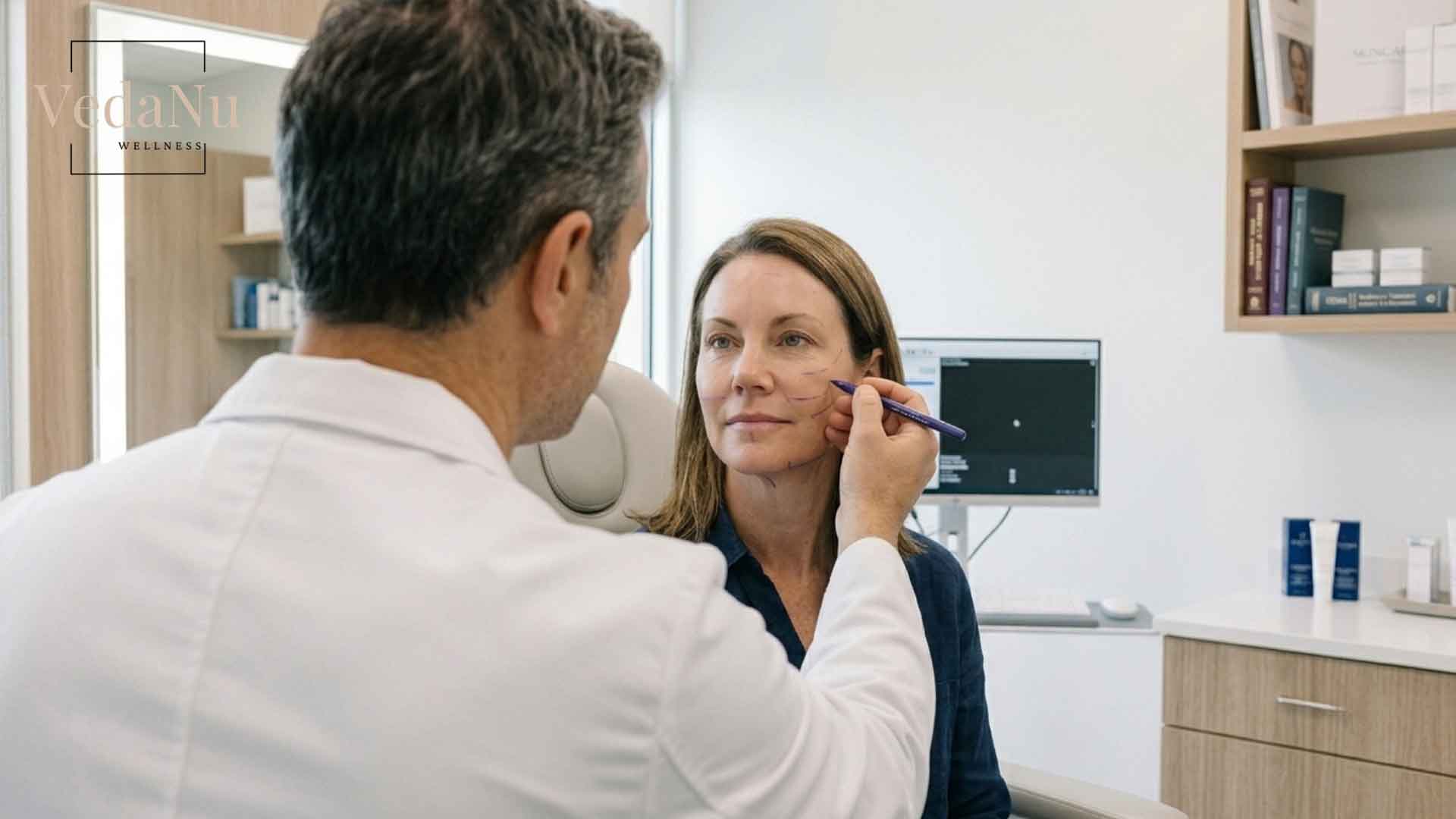
If you’re considering a facelift in San Diego, one of your first practical questions is likely how long recovery takes and when you’ll feel comfortable returning to your normal routine.
The recovery process follows a gradual timeline. The earliest days bring the most visible physical changes, with meaningful improvement typically emerging during the second week. Facial contours continue refining as your tissues heal over the following months.
Understanding each stage of recovery can help you prepare your schedule, arrange support at home, and recognize the normal changes that occur after facelift surgery.
Week 1: Rest, Recovery, and Early Healing
The first week is the most physically demanding stage of facelift recovery. Most patients report that discomfort is most noticeable in the first 48 to 72 hours and decreases each day after.
Days 1 to 3: Managing Swelling and Staying Comfortable
During the first few days, swelling and bruising begin to develop and become increasingly visible. You may experience tightness or mild discomfort around the cheeks, jawline, and neck as your tissues begin to heal.
Keeping your head elevated at a 30 to 45 degree angle when resting and sleeping can help support proper fluid drainage. Gentle movement around your home encourages circulation without placing unnecessary strain on your incisions.
Days 4 to 7: First Follow-Up and Early Progress
Swelling often reaches its peak during this period before gradually improving. Bruising may change in color as your body naturally clears the effects of surgery. Comfort, energy, and mobility typically improve during this stage.
Your first follow-up appointment with Dr. James Chao allows him to evaluate your healing, remove sutures (stitches used to close incisions) if appropriate, and provide guidance for the next phase of recovery. Following your surgeon’s aftercare instructions during this stage helps support a smooth healing process.
The Emotional Changes During Early Recovery
The first week can bring a mix of emotions alongside the physical healing. Temporary mood changes, sometimes called post-surgical blues, are common after facelift surgery. General anesthesia (medication that keeps you fully asleep during the procedure), prescription pain medication, disrupted sleep patterns, and the temporary appearance of swelling and bruising can all contribute to feelings of impatience, frustration, or uncertainty about the outcome.
These emotional shifts typically resolve within the first 2 weeks as physical recovery progresses, sleep normalizes, and the face begins to look more like your expected result. Staying in contact with your care team and understanding that healing is gradual can provide meaningful reassurance during this stage.
Week 2: Bruising Improves and Public Confidence Returns
By the second week, most patients feel comfortable enough to resume limited social activity as visible signs of surgery continue to fade.
Days 8 to 14: Visible Healing Progress
Swelling continues to improve, and makeup can often help conceal any remaining bruising. Mild sensitivity or changes in sensation may continue as healing progresses.
These temporary changes can occur as your tissues recover, but your surgeon will monitor your progress and provide guidance based on your individual recovery.
Returning to Desk Work and Daily Activities
Returning to desk work and light daily activities within 10 to 14 days is typical for patients recovering after a facelift in San Diego, depending on their healing progress and comfort level. Patients with physically demanding jobs may need additional recovery time.
Your return to work timeline can depend on factors such as the extent of your procedure, your daily responsibilities, and how your body responds during recovery.
Weeks 3 to 6: Returning to Your Routine and Increasing Activity
By weeks 3 through 6, many patients feel closer to their normal routine as the remaining visible signs of surgery resolve. You may feel more comfortable socially, yet your tissues are still healing and refining beneath the surface.
Daily Comfort and Visible Recovery
Residual tightness, mild firmness near the ears or jawline, and areas of numbness can continue during this stage. These sensations are part of the healing process as tissues adjust and nerves gradually recover.
Many patients notice their face looks more refreshed during this phase, but subtle changes continue as swelling settles and facial contours become more defined.
Gradually Resuming Exercise
Most patients can slowly increase their activity level during this phase. Walking and gentle movement are often encouraged first, followed by a gradual return to more demanding workouts when Dr. Chao approves.
Clearance for more intense exercise typically comes between weeks 4 and 6, depending on healing progress and the details of your facelift surgery. Avoid heavy lifting or strenuous activities until your care team confirms your body is ready.
Months 2 and Beyond: Refinement and Long-Term Results
By the second month, facial contours are more defined, swelling has largely resolved, and the result begins to reflect the surgical plan. Deeper tissue refinement continues over the following months.
When to Evaluate Your Final Results
Your facelift results develop gradually as your tissues adjust and heal. Many patients see significant refinement around 6 months, with subtle changes continuing beyond that point.
Dr. Chao can help you understand your progress and determine when your results have fully matured. Evaluating your results too early can create unnecessary concern, since the face continues to change for several months after surgery. Allowing the full maturation period gives the most accurate picture of your outcome.
Maintaining Your Refreshed Appearance
Healthy daily habits can support your skin and overall wellness after surgery. A consistent skincare routine using medical-grade products available through our skincare line, including SHEALD Recovery Balm for post-procedure hydration, along with diligent sun protection, adequate hydration, quality sleep, and balanced nutrition, all support long-term facelift results.
Some patients choose to complement their facelift results over time with dermal fillers for targeted volume restoration or Botox and Dysport for expression lines that surgery does not address.
ALSO READ: How Long Does a Facelift Last?
How Do Facelift Scars Change During Recovery?
Facelift incisions typically appear pink or red and slightly raised during the first several weeks. Over the following 3 to 6 months, the scars flatten and fade as the tissue matures.
By 12 months, most scars have settled into thin, pale lines that sit within the natural creases around the ears and hairline. Scar quality varies based on genetics, skin tone, and individual healing response.
Our post-op scar treatment program supports this process with options including BioCorneum® silicone scar gel and SHEALD Recovery Balm, available through our skincare products page. For scars that require additional refinement, CO2 laser resurfacing can improve texture and tone once healing is complete.
Factors That Influence Your Final Results
Facelift recovery varies based on your anatomy, the specific procedure performed, your body’s healing response, and the surgical technique Dr. Chao selects for your case.
The type of facelift procedure you receive can influence your healing timeline. A facelift (rhytidectomy, the medical term for facelift surgery) is customized based on your facial structure and aesthetic goals, which means recovery can vary between patients.
How Does Surgical Technique Shape Facelift Healing?
Different facelift techniques address specific areas of concern and may influence your recovery experience.
- Deep Plane Facelift (a technique that lifts the muscle, fat, and skin as a single unit for more complete correction): This technique repositions deeper facial structures to restore natural contours and improve areas such as the midface and jawline. Since it involves work beneath the skin, patients may experience more swelling during the early recovery period.
- SMAS Facelift (Rhytidectomy): This approach lifts and repositions the SMAS layer (superficial musculoaponeurotic system, the connective tissue layer between facial skin and the deeper muscles) to restore a natural-looking contour and address concerns such as sagging skin and jowls. Recovery depends on the extent of the procedure and each patient’s healing response.
- Endoscopic Facelift (a minimally invasive approach using small incisions and a thin camera to guide the procedure): This approach may be considered for patients with specific concerns that do not require a more extensive facelift procedure. Recovery varies based on the areas treated and the surgical plan.
Patients with early signs of aging may be candidates for a mini facelift, which involves a shorter procedure and a faster recovery than a full facelift.
Your surgeon will recommend the most appropriate technique based on your facial anatomy, goals, and desired outcome. The complexity of your procedure can influence factors such as recovery expectations and facelift cost.
LEARN MORE: Facelift vs. Mini Facelift: Which Procedure Matches Your Goals?
What Warning Signs Should You Watch for During Facelift Recovery?
Warning signs that require prompt medical attention during facelift recovery include fever or chills, sudden one-sided swelling, escalating pain that does not respond to medication, and active bleeding or persistent drainage near the incisions. Most other changes, including tightness, itching, mild asymmetry in swelling, and areas of firmness, are part of the normal healing process.
Contact Dr. Chao’s team promptly if you experience:
- Fever or chills: These can signal a developing infection, and infections respond best to early treatment before they spread or reach your incisions.
- Sudden swelling on one side: Uneven swelling that appears quickly may point to a hematoma, a collection of blood beneath the skin that your surgeon may need to drain promptly to protect your result.
- Severe pain that escalates instead of easing: Discomfort should trend downward day by day. Pain that climbs can indicate pressure building under the skin and calls for an evaluation rather than another dose of medication.
- Bright red bleeding or fluid leaking near your incisions: Active bleeding or persistent drainage can disrupt healing tissue and raise infection risk, so your surgeon should assess it the same day.
When something feels unusual during recovery, reaching out to your surgical team allows you to receive guidance and address concerns early.
Plan Your Recovery with Expert Support
Recovery progresses more smoothly with a surgical team that remains involved well beyond the day of your procedure. At VedaNu Wellness, Dr. James Chao, a board-certified plastic surgeon and FACS with more than 25 years of experience in plastic, reconstructive, and facial rejuvenation surgery, provides attentive guidance starting at your consultation and continuing through each stage of healing.
Schedule a consultation now at our plastic surgery clinics in San Diego and Beverly Hills. Your care plan will be tailored to your anatomy, lifestyle, and the approach recommended for your facelift in San Diego. Flexible financing through Cherry, CareCredit, and PatientFi is available. Visit our financing page for details.