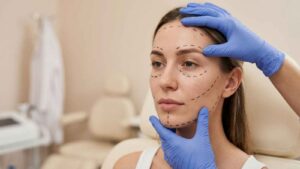

Visible scarring is one of the most common reasons people hesitate before scheduling a facelift consultation, even though they are otherwise ready for it. The concern is understandable. The face cannot be easily concealed, and the idea of a lasting mark can feel at odds with the intention of looking naturally refreshed.
What matters most to understand early is this: when facelift surgery is performed with precision-based planning and an anatomy-respecting approach, incision lines are placed to follow natural contours of the face and typically mature into fine, discreet lines that blend into surrounding skin over time. The objective is not obvious change, but seamless restoration — where the result is seen in balance, softness, and proportion, not in visible evidence of intervention.
Where Are Facelift Incisions Hidden?
Facelift placement follows a planned route across three regions of the face, each chosen because the anatomy itself does the work of camouflage. What we walk patients through during consultation is how these zones connect, and why the surgeon’s familiarity with them matters so use light mineral makeup to cover any remaining disco h to the final result.
Along the Hairline and Temple
Placement begins in the temporal hairline, set a short distance behind the front edge of the hair. This access point allows your surgeon to address the upper face and outer brow without leaving any mark on the forehead skin. What this means in real life is that the resulting fine line sits inside hair-bearing tissue, hidden by hair growth even when you pull your hair back.
Hair density along the placement line can decrease slightly during healing, which is why careful technique preserves the natural hairline shape. With careful technique, the line stays covered through normal styling, including ponytails and updos.
Around and Behind the Ear
The ear region carries the longest portion of placement. This is where refined technique matters most, because the area offers three natural hiding zones that a skilled surgeon uses in sequence.
- The first is the tragal notch, the small cartilage flap in front of the ear canal. Tucking the closure point behind this fold places it inside a natural shadow that the eye does not register as a line.
- The second is the helical rim, the curved outer edge of the ear, where the line traces the ear’s silhouette rather than cutting across the face.
- The third is the post-auricular crease, the deep fold where the back of the ear meets the scalp, which usually heals with low skin tension and produces a thin, pale line that becomes difficult to see once mature.
Tension in the post-auricular area varies with closure technique and individual anatomy, which is one reason surgeons’ experience meaningfully affects scar quality.
Under the Chin and Behind the Lower Scalp
When facelift surgery includes neck rejuvenation, a short access point is added beneath the chin within the submental crease, the horizontal fold already present there. The line is usually less than an inch long and disappears into the natural shadow of the jaw within weeks.
For extended lifts that address the lower neck and jawline, a brief extension travels behind the ear into the lower scalp, sitting within hair growth, as with the temporal placement.
How Healing Unfolds Over Time
Scars are not finished products at the one-week mark. They progress through three stages over the year or more following surgery, and the early appearance bears little resemblance to the mature result. Knowing what is normal at each stage helps you avoid alarm when an early scar looks worse than the final line will be.
Early Healing (Weeks 1 to 2)
The first two weeks are part of the body’s initial repair response. Blood vessels constrict to control bleeding, white blood cells clean the area, and the closure points appear pink to red, slightly raised, and tight when you smile or open your mouth wide.
What we typically see in this stage:
- Swelling that peaks around day three
- A pulling sensation along the ear and hairline
- Numbness along the closure lines as nerves begin healing, with sensation returning gradually over the following months
- Sutures dissolving on their own or being removed during a follow-up visit, with timing that varies by surgeon protocol
- Bruising in the lower face and neck, shifting from purple to yellow
This stage looks the most dramatic, and it is the shortest. By the end of week two, redness softens, and the lines start to flatten.
Rebuilding (Weeks 3 to 6)
Collagen production takes over during this stage. Your body lays down new tissue to bridge the area, which is why scars feel firm, slightly raised, and occasionally itchy. You may experience tingling along the line as nerves regenerate, which is a normal part of recovery.
The line may still appear pink, but the texture begins to change. Touching it reveals a slight ridge rather than an open wound. The area typically begins to settle once the initial swelling and bruising resolve.
Read More: How To Keep Your Skin Hydrated? (With 10 Simple Tips)
Refinement (Months 6 to 18)
The final and longest stage reorganizes collagen into a smoother, flatter line. Over the next year, your body breaks down excess collagen and aligns the remaining fibers along the natural tension lines of the face.
By six months, most facelift scars have already faded significantly. By twelve months, the line is usually pale pink or close to your skin tone. Most scars reach mature appearance between twelve and eighteen months, with some continuing to refine for up to two years. At that point, the lines blend into surrounding anatomy and become genuinely difficult to find without close inspection.
What Helps Scars Fade Beautifully
Genetics influence how your skin produces and breaks down collagen, but daily care meaningfully improves the final appearance. We guide patients through three care layers, each addressing a different stage of healing.
Medical-Grade Silicone
Silicone is the clinical gold standard for scar care. Beginning around two to three weeks after surgery, once the closure lines are fully sealed, medical-grade silicone gel or adhesive sheets are applied directly over the area. The silicone creates a hydrated, oxygen-permeable barrier that softens scar tissue and reduces residual redness.
Many surgical practices recommend post-op scar treatments like BioCorneum, a medical-grade silicone scar gel that combines silicone with SPF 30 sun protection, making it especially useful for facelift scars on sun-exposed areas of the face and neck.
A separate broad-spectrum sunscreen is still recommended over the top during peak daylight hours, since SPF 30 alone does not provide enough coverage for prolonged outdoor exposure during the healing window. Skin care products and recovery balms such as iS Clinical SHEALD Recovery Balm complement silicone-based products by hydrating compromised skin and supporting the broader recovery process.
What matters most is consistency. Daily application for three to six months produces visible improvement in scar flatness, color, and texture compared with no care at all.
Sun Protection That Actually Holds Up
Ultraviolet exposure can darken healing scar tissue and lock in pigment changes that are difficult to reverse later. Sun protection during the first year produces the best chance of a scar that matures into a pale, low-visibility line. For patients recovering in San Diego or Beverly Hills, the high-UV Southern California climate makes this care layer especially important.
A few things we typically recommend during early recovery:
- Consistent broad-spectrum SPF 50 or higher on all closure areas, reapplied throughout the day
- Many patients find wide-brimmed hats helpful during the first months, particularly outdoors on overcast days when UV exposure is often underestimated
- Hair styled to cover the temporal and post-auricular areas when possible
- A light scarf to shield the submental line during the first three months
Sun discipline matters most in the first six to twelve months, and the habit pays off long term.
Refinement Treatments When Needed
For scars that heal more visibly than expected, in-office care can help refine them. Timing varies by surgeon and by how your closure lines are settling, but options typically open up after the eight-week mark once tissue is stable.
Options we discuss during follow-up visits:
- CO2 laser resurfacing uses fractional laser energy to remodel scar tissue, improve pigmentation irregularities, and blend the line with surrounding skin.
- Microneedling triggers a controlled wound-healing response that softens raised scars and improves texture.
- Steroid injections address hypertrophic or raised scar tissue early, often used preventively in patients with a known scarring tendency.
- Targeted laser therapy can reduce stubborn redness during the rebuilding and early refinement stages for patients whose scars retain pink discoloration longer than expected.
A consultation with your surgical team identifies which option fits your skin type, your timeline, and what your scars are actually doing.
What Shapes Your Individual Scar Outcome
Two patients can have the same facial procedure with the same surgeon and still heal differently. The final result reflects three categories of variables: your biology, the surgical approach selected for you, and how recovery progresses in the early weeks.
Your Skin and Genetic Tendencies
Several personal factors shape how your body builds and breaks down scar tissue:
- Fitzpatrick skin type: Darker skin tones carry a higher risk of hyperpigmentation, in which scars heal darker rather than fade, making rigorous sun protection a non-negotiable part of recovery.
- Family history of keloids or hypertrophic scarring: If close relatives form raised, thick, or rope-like scars, you may share the same tendency. We can plan preventive steroid treatments early in the healing process to manage this risk.
- Age and collagen quality: Younger patients often heal faster, but can produce slightly more visible scar tissue. Mature patients heal more slowly with finer scars.
- Smoking and nicotine use: Nicotine constricts blood vessels and reduces oxygen delivery to healing tissue. Most surgical teams require nicotine cessation for at least four weeks before surgery and four weeks after, with longer windows producing better scar outcomes.
Honest conversation about these factors during your consultation lets your surgical team adjust technique, closure, and care to your biology rather than working from a generic protocol.
Surgical Approach and Tension Management
How a scar matures depends heavily on the amount of tension across it during healing. Lines closed under high tension widen and stay visible. Lines closed under low tension stay thin and pale.
The technique selected for your facelift directly affects how scars heal. At VedaNu Wellness, three approaches are offered depending on facial anatomy and aesthetic goals:
- SMAS facelift lifts and repositions the superficial musculoaponeurotic system (the SMAS layer) to restore facial contour without creating a tight or pulled appearance.
- Deep plane facelift releases and repositions the midface, jawline, and nasolabial tissues as a single unit, redistributing tension to the deeper layer and leaving the skin edges relaxed at closure.
- Endoscopic facelift uses smaller access points and specialized cameras to target specific areas, resulting in reduced scarring for patients whose anatomy is suitable for this approach.
The closure technique also shapes the result. Layered suturing, hidden internal stitches, and precise trimming of skin edges produce visibly better scars than surface sutures alone.
How Early Recovery Progresses
Two specific complications can change scar quality if they occur:
- Hematoma, a collection of blood under the skin, increases tension on the closure line and can result in a wider, more visible scar if not addressed promptly. Symptoms include sudden swelling and pain on one side.
- Infection disrupts the early healing process and can lead to thicker, more prominent scarring. Following wound-care instructions and watching for redness, warmth, or unusual drainage helps catch issues early.
Patients undergoing a revision facelift sometimes experience scar behavior different from that of first-time patients because the surrounding tissue has already healed once and may have a reduced blood supply. Your surgical team will discuss what to expect based on your specific history.
Read More: After Aesthetic Treatment: What Matters Most?
Choosing the Right Surgeon Matters
How a scar matures has as much to do with the hands that placed it as the biology of your skin. At VedaNu Wellness, facelift surgery is performed by Dr. James Chao, MD, FACS, a board-certified plastic surgeon and facial rejuvenation specialist with over 25 years of experience refining the techniques that determine how cleanly scars heal.
The approach is consistent: precise anatomical planning, tension-managed closure, and a natural-result philosophy that treats scar placement as a core part of the surgical design. Patients researching facelift options in San Diego often arrive worried about visible scarring and leave the consultation with a much clearer picture of why placement, technique, and aftercare together produce a clearer picture of how placement, technique, and aftercare shape the final result.
If you have been considering a facelift or mini facelift and want to understand how scar placement and healing would unfold on your face, contact us to discuss your goals in a private consultation at our plastic surgery clinic. Dr. Chao will review your anatomy, walk you through what is realistic for your skin and goals, and build an aftercare plan suited to your recovery. Consultations are available at our San Diego and Beverly Hills locations.
Frequently Asked Questions About Facelift Scars
How visible will my facelift scars be after full healing?
After two years, most scars settle into the natural creases and hair-bearing zones where they were placed, and are difficult to identify in normal interaction. Visibility varies with skin type, surgical technique, and the consistency of aftercare. Friends and acquaintances usually do not notice mature scars in normal interaction.
When can I wear my hair up after a facelift?
Many patients feel comfortable wearing their hair up after three to four weeks, once swelling and bruising subside. By four to six weeks, redness has softened enough that most patients wear their hair freely without concern. Your surgical team will provide you with a personalized timeline based on your recovery progress.
Can scar revision fix poor healing later?
Yes. If a scar heals more visibly than expected, options range from non-surgical treatments such as laser therapy and silicone to minor surgical scar revision. The best window for revision is typically after the scar has fully matured, around twelve to eighteen months after surgery.
How soon can I use makeup over the closure areas?
Most surgical teams clear patients to use light mineral makeup over closed lines within two to three weeks after surgery. Heavier coverage is best delayed until four weeks to avoid irritation. Confirm the timing with your surgical team before applying anything to the closure areas.
When can I start scar massage?
Scar massage typically begins around four to six weeks after surgery, once the lines are fully closed and stable. Gentle circular pressure helps break down disorganized collagen and improves scar pliability. Your surgical team will demonstrate the proper technique during a follow-up visit.
Do men have different facelift scar concerns than women?
Yes. Men typically wear their hair shorter, which reduces the camouflage available around the ear and temple. Placement is often adjusted for male patients to follow the beard line and preserve sideburn position for a natural, masculine appearance.