After your initial facelift, changes to your face are a natural part of the aging process. Over the years, you may notice areas that could benefit from additional refinement. Whether you’re seeking to address specific concerns or maintain your results, a revision facelift offers a path forward.
Compared to your original procedure, a revision facelift involves distinct considerations. Your surgeon must account for factors like scar tissue, skin laxity, and facial structure, all of which have been altered by the previous surgery. Planning becomes a more intricate process, tailored to your unique starting point.
Why Might You Need a Second Facelift?
Your face continues to age after a facelift, so changes in your appearance are possible over time. In other cases, the prior operation may not have fully addressed your goals. A second facelift may improve returning sagging, uneven contours, or areas left after the initial lift.
What Can a Revision Facelift Address?
A revision facelift can address several concerns:
- Incomplete correction: The first procedure may have left some sagging skin, uneven contours, or facial asymmetry that still requires attention.
- Changes from natural aging: Years after the original surgery, your jawline may lose definition or your lower face may begin to sag again.
- Issues from previous surgery: Visible scarring, uneven skin tension, or other surgical changes may require further evaluation and possible correction.
Some facelift revisions focus on improving concerns from an earlier procedure. Others address new signs of aging that develop years after a successful lift. These situations may require different surgical approaches based on the changes you want to address.
READ MORE: Can a Facelift Look Natural? Avoiding the “Pulled” Look
When Is the Right Time for a Revision Facelift?
Many patients want to correct their facelift results as soon as they notice something they don’t like. However, your face needs time to heal before your surgeon can accurately assess the outcome of the initial lift.
Surgeons often recommend waiting around 12 months before an elective revision facelift, giving your tissues time to heal. Your recovery and the reason for revision may affect the timing.
Several changes continue during this period:
- Swelling gradually decreases: Your facial contours become easier to evaluate as swelling fades.
- Scar tissue matures: Internal scarring continues to change over several months, which may affect how firm or tight certain areas feel.
- Skin and tissues settle: Tightness gradually improves, allowing your surgeon to see the longer-term results of the first procedure.
Changes you notice during early recovery may not reflect your final result. Mild swelling, firmness, and unevenness can improve as your tissues heal. Scheduling another lift before your tissues have adequately recovered can make surgery more challenging and the results harder to predict.
Discussing your concerns before a year has passed is an option. If you notice unexpected changes during recovery, contact your original surgeon for guidance. Sudden swelling, severe pain, or other concerning symptoms may require prompt medical attention.
How Is a Facelift Revision Different From Your First Surgery?
The initial facelift changes the skin and tissues beneath your face. During a second procedure, your surgeon must work around those changes. Previous incisions, internal scarring, and alterations in tissue position can make revision surgery more complex than the original operation.
How Does Previous Surgery Affect Your Facial Anatomy?
Your surgeon must consider several factors before planning another facelift:
- Internal scar tissue: Scarring from the first surgery can make it harder to separate and reposition facial tissues.
- Changes in skin and tissue: The prior lift may change the thickness, flexibility, or blood supply of certain tissues, requiring careful surgical planning.
- Existing incisions: Your surgeon reviews previous incisions when planning where to make new incisions and how to approach the underlying tissues.
RELATED ARTICLE: Facelift Scars: Where They Hide and How They Heal
How Does Your Surgeon Customize the Revision?
Your surgeon may use different techniques during the second facelift, depending on the areas that need correction.
Depending on your needs, your treatment plan may include:
- Targeted lifting: Addressing sagging around your cheeks, jawline, or neck without unnecessarily treating other areas.
- Adjusting underlying tissues: Repositioning deeper facial structures when appropriate to improve your contours.
- Combining procedures: Considering facial fat transfer if volume loss contributes to your concerns.
For example, a surgeon may be able to improve returning jowls or an uneven facial contour. Skin quality and tissue changes from the prior lift can limit how much correction another procedure can achieve.
What Risks Should You Understand Before a Second Facelift?
Like your first facelift, revision surgery carries risks. Previous surgical changes can also introduce additional challenges that your surgeon must consider.
Potential risks include:
- Bleeding or infection: These complications can occur after facial surgery and may require additional treatment.
- Healing problems: Changes in tissue blood supply may affect how your skin heals.
- Nerve injury: Surgery near facial nerves carries a risk of temporary or, in some cases, lasting weakness.
- Scarring or asymmetry: Some existing scars or uneven areas may remain visible even after correction.
Your individual risk depends on your health, previous procedures, and the extent of the planned surgery. A second facelift may improve certain issues, but it cannot correct every change from the original procedure.
At VedaNu Wellness, your safety is our top priority. Dr. Chao performs all surgical procedures at an accredited outpatient surgical facility to ensure the highest standards of care.
How Do You Find the Right Revision Facelift Surgeon?
Choosing a surgeon for your second facelift involves more than reviewing credentials. Understanding their experience with revision cases, seeing examples of their work, and feeling comfortable asking detailed questions are also important.
What Should You Look for in a Revision Facelift Surgeon?
When comparing surgeons, consider these factors:
- Board certification: Look for a board-certified plastic surgeon with appropriate training in facial surgery.
- Revision surgery experience: Ask how often the surgeon performs secondary facelifts and if they have treated cases similar to yours.
- Before-and-after photos: Review revision cases with concerns similar to yours, including longer-term results when available.
- Clear communication: Choose a surgeon who explains potential improvements, limitations, and surgical risks without making unrealistic promises.
If you’re meeting with a revision facelift specialist, ask these questions:
- How many secondary facelifts do you perform?
- Have you treated patients with goals similar to mine?
- How could my previous incisions affect the next procedure?
- What improvements may be difficult to achieve?
- What complications should I understand before deciding?
The answers can help you understand the surgeon’s experience and approach to your particular situation.
Should You Return to Your Original Surgeon or Get a Second Opinion?
If you have concerns about your initial results, your original surgeon is often a good place to start. They have access to details about the techniques used during the first lift, which may help explain changes during recovery.
Seeking a second opinion may be helpful if your concerns remain unresolved or you’re considering a more complex correction. An independent surgeon can review your previous results and offer another perspective on possible treatment options.
If you’re meeting a new surgeon, ask your previous provider for a copy of your operative report. Photos taken before and after your first facelift can also help explain how your appearance has changed.
Are There Non-Surgical Alternatives to a Revision Facelift?
Not every concern after a facelift requires another surgery. If you’ve noticed minor volume loss, uneven contours, or visible scarring, certain non-surgical treatments may help improve your appearance.
Lost facial volume may respond to fillers, but loose skin and deeper tissue sagging require a different approach.
Depending on your concerns, treatment options may include:
- Dermal fillers: Restore lost volume in areas like your cheeks or temples and improve certain contour irregularities. Adding too much filler can make your face appear overly full without correcting sagging.
- CO2 laser resurfacing: May help soften the appearance of certain scars and improve your skin’s texture. It does not reposition deeper facial tissues.
- Non-surgical skin tightening: Radiofrequency or ultrasound-based treatments may offer modest tightening for selected patients with mild skin laxity. These options are not suitable for everyone, particularly after previous facial surgery.
Non-surgical treatments can address specific concerns, but they cannot provide the same degree of lifting as surgery. If your issues involve significant loose skin or sagging deeper tissues, another facelift may offer a more appropriate way to address those changes.
Schedule Your Consultation with San Diego’s Revision Facelift Expert
Deciding on a second facelift involves more than choosing a procedure. Your previous results, healing history, and expectations all play a part in finding an appropriate next step.
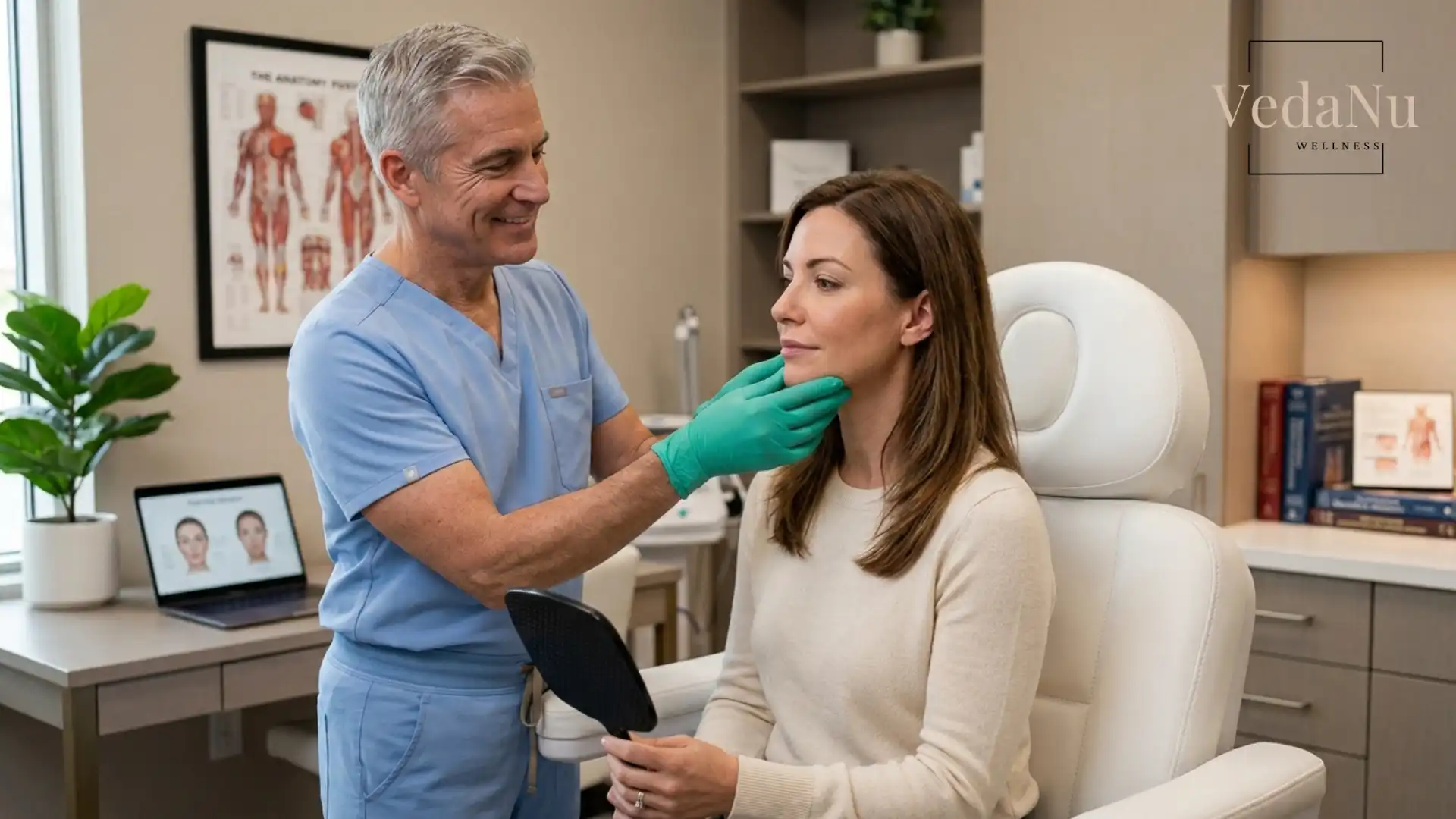
At VedaNu Wellness, Dr. James Chao, MD, Fellow of the American College of Surgeons, can review your surgical history, assess your facial structure, and discuss the changes you hope to achieve. During your consultation, you’ll learn about potential treatment options, surgical risks, and what another procedure may realistically improve.
Our team provides personalized support throughout your treatment planning and recovery, helping you understand what to expect at each stage. We serve patients from La Jolla, Del Mar, Rancho Santa Fe, Carlsbad, Encinitas, Carmel Valley, and beyond at our two convenient locations:
- San Diego Office: 8901 Activity Road, Suite 102, San Diego, CA 92126
- Beverly Hills Office: 433 N Camden Drive, Suite 610, Beverly Hills, CA 90210
We also offer flexible financing options through CareCredit, PatientFi, and Cherry to help you plan for your procedure. You can ask our team about available payment plans and current special offers during your consultation.
If you’re considering a facelift revision in San Diego or Beverly Hills, schedule your consultation online with VedaNu Wellness. We also welcome out-of-town patients exploring their surgical options. You can also contact us to ask about Dr. Chao’s availability.