Facelift Revision in San Diego
You may have been pleased with your original facelift, but years later, you might notice familiar signs of aging returning. If your jawline looks less defined or your reflection no longer matches your expectations, you may be ready to explore your options.
At VedaNu Wellness, facelift revision in San Diego offers an opportunity to revisit your aesthetic goals with guidance from an experienced surgeon. Dr. James Chao, MD, Fellow of the American College of Surgeons (FACS), brings more than 25 years of surgical experience as a board-certified plastic surgeon, combining careful evaluation with a personalized approach to facial rejuvenation.
Schedule a consultation to discuss your concerns and learn what may be appropriate for you.
What Is a Revision Facelift?
A revision facelift, also called a secondary facelift, is a surgical form of revision facial rejuvenation for patients who have previously undergone facelift surgery. Your surgeon may also consider changes from an earlier neck lift when planning your treatment.
Needing another facelift doesn’t necessarily mean your first surgery was unsuccessful. You may simply want to address changes that have developed over time.
Primary vs. Revision Facelift
Your first facelift and a revision facelift may have similar goals, but they differ in the surgical conditions your surgeon must consider.
Primary Facelift | Revision Facelift | |
Previous surgery | No prior facelift | Previous facelift, sometimes with a neck lift |
Facial tissues | Tissues have not undergone a previous facelift | May have scar tissue and changes from earlier surgery |
Surgical planning | Focuses on your current anatomy and goals | Also considers previous incisions, scar tissue and surgical changes |
If you’re exploring your first facelift, our facelift surgery page covers the primary procedure in detail.
What Concerns Can a Facelift Revision Address?
Returning Laxity in the Lower Face, Jawline, and Neck
Years after your first facelift, you may notice changes in these areas.
- Returning jowls: Sagging tissue begins to collect along your jawline, reducing its definition.
- Loose neck skin: Skin beneath your chin becomes loose again or remains less firm than you expected.
- Lower face laxity (loosening): Skin and underlying tissues around your mouth begin to sag, making folds or creases more noticeable.
Residual Concerns After a Previous Procedure
Some concerns may remain after your original surgery, including:
- Facial asymmetry: You notice differences between the two sides of your face or neck.
- Uneven contours: Certain areas appear irregular or less smooth than you expected.
- Visible scarring: Your previous incisions left scars that appear widened, raised or more noticeable.
- An overly tight appearance: Your facial tissues appear pulled or tighter than you intended.
These concerns may warrant an evaluation, although another facelift may not correct each one. Some patients may benefit from other treatments depending on the nature of their concerns.
If these changes sound familiar, schedule a consultation with Dr. Chao to discuss appropriate treatment options.
Why Does Revision Facelift Surgery Require a Different Plan?
Revision facial surgery isn’t about simply repeating a facelift. It requires understanding your previous surgical history, how your face has changed and what a revision can safely and realistically achieve now.
Previous facelift surgery can change the tissues beneath your skin, requiring your surgeon to adjust the techniques used during revision facelift surgery. Scar tissue, changes in deeper facial layers and previous incisions can affect how your surgeon safely repositions tissue.
How Does Previous Surgery Change Your Facial Anatomy?
Several changes from your first procedure can influence a second surgery.
- Scar tissue: Your body forms scar tissue as it heals, which can make facial tissues harder to separate and reposition.
- Altered tissue layers: Your previous surgery may have changed or removed skin, fat or deeper tissue, affecting the layers your surgeon works with during revision.
- Circulation and tissue movement: Earlier surgery can change how blood flows through your facial tissues and how easily they shift. Your surgeon accounts for these differences when planning your revision.
How Do Skin Quality and Existing Incisions Affect Revision Surgery?
Your skin may be thinner or less elastic than it was during your first facelift, especially if several years have passed. Your previous incisions also influence where your surgeon can place new incisions and how much skin can be adjusted.
Existing scars may limit certain surgical options, so your surgeon must consider their location and condition when planning further corrections.
Who May Be a Candidate for Facelift Revision?
You may be a potential candidate for facelift revision in San Diego if you have changes that another procedure could improve and your overall health supports elective surgery.
You may be a good candidate if you:
- Have previously undergone a facelift and want to explore another procedure
- Have facial or neck concerns that another procedure may reasonably improve
- Have healed adequately from your previous surgery
- Are in good overall health and can safely undergo another operation
- Do not have uncontrolled medical conditions that could increase surgical risks
- Understand the potential risks and have realistic expectations about what revision surgery can achieve
Your Facelift Revision at VedaNu Wellness
At VedaNu Wellness, your care begins with a detailed discussion of your concerns and continues through surgical planning, recovery and follow-up visits. Dr. James Chao will explain each stage so you understand what to expect from your procedure.
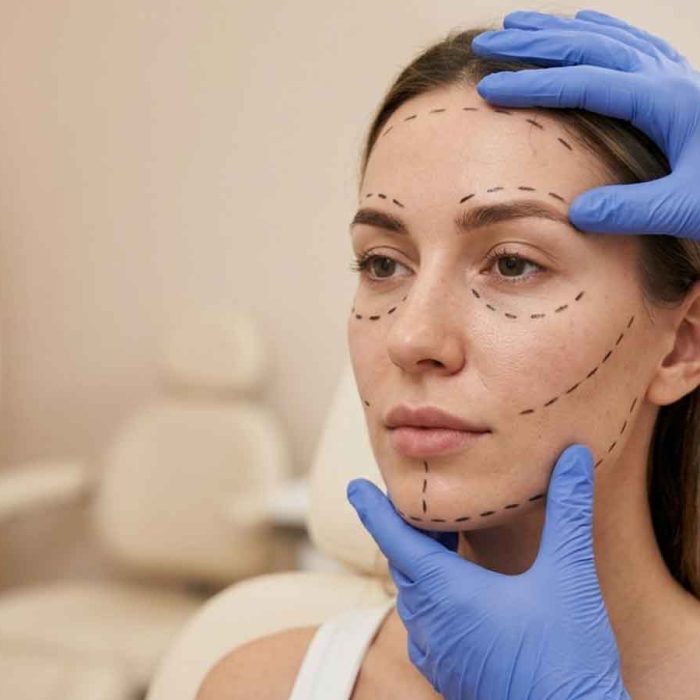
Your Consultation and Examination
- Facial anatomy and skin quality: Your current facial structure, skin elasticity, thickness and underlying tissue condition.
- Previous surgical procedures: Details of your earlier facelift or neck lift, including any complications.
- Existing scars and incisions: Their location and how they may affect another procedure.
- Medical history: Your overall health, medications and factors that may affect surgical safety or healing.
- Aesthetic goals: What you want to improve and the results you’re hoping for.
Your Individualized Surgical Plan
Your facelift revision may involve a focused correction or a more extensive procedure involving your face and neck. Dr. Chao determines the surgical approach based on the areas that need correction and the adjustments your tissues can safely support. He performs revision procedures in an accredited outpatient surgical facility.
Depending on your needs, your procedure may involve repositioning deeper facial tissues, adjusting excess skin or refining areas affected by your first surgery. Previous incision placement can also influence where Dr. Chao makes new incisions.
Complementary procedures, such as facial fat grafting, may help address volume loss that a facelift alone cannot correct. In some cases, non-surgical treatments such as dermal fillers or skin resurfacing may be appropriate for concerns that do not require another operation. These treatments cannot replace the deeper tissue lifting that surgery achieves.
Dr. Chao will explain which options may address your needs before recommending a treatment approach.
Recovery After Revision Surgery
Your recovery after a revision facelift may differ from your first procedure. The healing process depends on the extent of your surgery, your tissue condition and your overall health.
Swelling, bruising and facial tightness are common during early recovery. These symptoms generally improve over the following weeks, though some lingering swelling and changes in sensation may take longer to settle.
Your recovery may follow these general stages:
- First several days: Swelling, bruising and tightness may be most noticeable. You will need time to rest and follow your surgeon’s instructions for wound care and activity restrictions.
- First two weeks: Many facelift patients see noticeable improvements in swelling and bruising. Your recovery may take longer depending on the complexity of your revision.
- Following weeks and months: You may gradually return to more activities as your surgeon permits. Residual swelling can continue to settle as your tissues heal.
Dr. Chao will provide personalized aftercare instructions and monitor your healing through follow-up appointments. He will also guide you on when you can safely resume work, exercise and other daily activities based on your recovery progress.
Discover The Benefits of a Revision Facelift
Restore youthful contours and redefine your profile with lasting, natural-looking results.
What Are the Risks and Limitations of Revision Facelift Surgery?
Like any surgical procedure, revision facelift surgery carries risks. Previous operations can also make certain corrections more challenging because your tissues may have developed scar tissue or changes in blood supply.
Potential complications include:
- Bleeding or hematoma: Blood may collect beneath the skin after surgery and sometimes requires additional treatment.
- Infection: An infection may develop near the surgical area and require medication or further care.
- Wound-healing problems: Previous scars, reduced blood supply and other health factors may affect how your skin heals.
- Nerve injury or sensation changes: You may experience numbness or changes in facial sensation. Less commonly, facial nerve injury can affect muscle movement.
- Scarring and asymmetry: New scars or differences in facial contours may remain after healing.
- Anesthesia-related complications: General anesthesia and other forms of anesthesia carry medical risks that your surgical team will review before your procedure.
Your previous facelift may also limit how much tissue your surgeon can safely reposition or remove. Some concerns, including existing scars, asymmetry or changes from earlier surgery, may not be fully correctable.
Dr. Chao will discuss the potential risks, limitations and expected improvements associated with your proposed procedure so you can make an informed decision.
Why Choose VedaNu Wellness for Your Facelift Revision?
When you compare surgeons, look for a revision facelift specialist with deep facial surgery experience and a careful evaluation process. At VedaNu Wellness, patients seeking a facelift revision in San Diego receive care from a board-certified plastic surgeon with extensive surgical experience. The practice combines medical expertise with attentive patient support throughout the treatment process.
More Than 25 Years of Surgical Experience
Dr. James Chao, MD, FACS, is a board-certified plastic surgeon with more than 25 years of experience in plastic, reconstructive and hand surgery.
He holds certification from the American Board of Plastic Surgery and has advanced surgical training, including fellowship training in hand and microsurgery. He is an honors graduate of Stanford University, earned his MD at NYU School of Medicine and completed his surgical training at NYU and Bellevue Hospital.
He previously served as a Clinical Professor at UC San Diego. His background in reconstructive surgery and facial rejuvenation supports a careful approach to evaluating complex revision cases.
A Personalized Approach to Natural-Looking Results
Your face, jawline and neck should complement one another after surgery. Dr. Chao considers how changes in one area may affect your overall facial appearance, with the goal of maintaining natural proportions.
His approach focuses on improving facial contours without creating an excessively tight or pulled appearance. The aim is a refreshed look that respects your existing features, although your final results will depend on your individual circumstances.
Schedule Your Facelift Revision Consultation
Explore your facelift revision in San Diego options with Dr. James Chao, MD, FACS, at VedaNu Wellness. If you’re considering another facelift, our team can help you arrange an appointment and answer questions about the consultation process.
Schedule your consultation online or call (858) 222-2883 to speak with our team. Prefer to send a message? Use our contact form.
You can visit our San Diego clinic at 8901 Activity Road, Suite 102, San Diego, CA 92126, or our Beverly Hills clinic at 433 N Camden Drive, Suite 610, Beverly Hills, CA 90210. Our San Diego clinic serves patients throughout La Jolla, Del Mar, Rancho Santa Fe, Carlsbad, Encinitas and Carmel Valley. Our team can help you confirm the appropriate location for your consultation and treatment.
We also offer convenient online bill payment, special offers and financing options through Cherry, CareCredit and PatientFi to help you plan for your procedure. If you’re traveling from outside the area, explore our out-of-town patient resources for assistance with planning your visit.
Facelift Revision in San Diego FAQs
Can I have another facelift if I’ve already had one?
Why would someone need a revision facelift?
Most patients pursue secondary facial rejuvenation for one of two reasons. Facial aging has continued since their first procedure, or they have residual concerns they would like addressed. Some want further refinement in specific areas.
Is revision facelift surgery more complicated?
How long should I wait after my previous facelift?
If you are considering an elective revision to improve your original results, surgeons often recommend waiting approximately 12 months to allow swelling to resolve and scar tissue to mature. Some patients may need more time, depending on their recovery.
You do not need to wait a full year to seek medical advice if you have concerns about your healing or surgical results. Dr. Chao can assess your condition and recommend an appropriate time for further treatment.
Can a revision facelift improve all my concerns from a previous surgery?
Not necessarily. Some changes from your previous surgery may limit what another procedure can correct. Your surgeon may recommend additional treatments or explain when certain improvements are unlikely to be achievable.